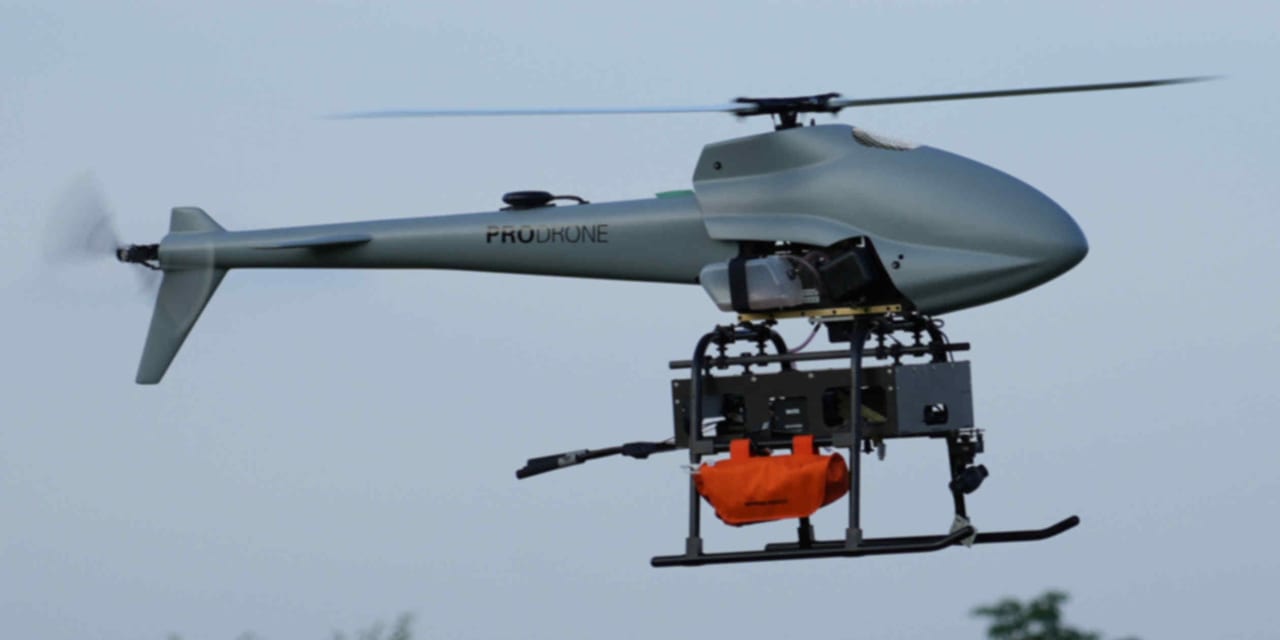
Key facts
- Prodrone will invest 3 billion yen ($19 million) to build a drone mass production facility in Aichi prefecture.
- The facility aims to produce 58,000 drones annually by March 2029.
- Prodrone received certification for its stable supply plan for unmanned aerial vehicles under Japan's economic security promotion law.
- The Japanese government aims to have an annual production capacity of 80,000 domestic drones by 2030.
- Prodrone plans to explore sourcing drone components from local automotive parts manufacturers to reduce costs.
Japanese drone developer Prodrone is set to invest approximately 3 billion yen ($19 million) to establish a mass production facility in Aichi prefecture, aiming to produce 58,000 drones annually by March 2029. This initiative is part of Japan's broader strategy to bolster domestic drone production and strengthen supply chains, reducing reliance on imports, particularly from China.
Prodrone has received certification from Japan's Ministry of Economy, Trade and Industry for its stable supply plan for unmanned aerial vehicles under the economic security promotion law. The company plans to develop production technology, secure a new factory, and introduce production equipment. The government is supporting this effort with subsidies, with a limit of 1.5 billion yen.
The Japanese government has set a target to achieve an annual production capacity of 80,000 domestic drones by 2030. Prodrone's facility, to be located within Howa Industries, is expected to begin trial production by the end of this year and full operation by the end of 2027, focusing primarily on industrial drones. Prodrone's CEO, Toshiya Totani, has expressed an ambitious goal to price smaller drones in the 100,000 yen range to compete with Chinese manufacturers.
However, challenges remain in creating demand for more expensive domestic drones. Current market data shows that imported drones, largely from China's DJI, dominate the Japanese market, with domestic drones holding only about a 2.0% share. Other domestic manufacturers like ACSL have noted the difficulty in competing with DJI on both price and performance, suggesting the defense market might be the primary viable avenue for domestic drone companies.