Key facts
- Influencers promoting AI companies are facing significant audience backlash and criticism.
- AI companies are offering substantial financial incentives, including five to seven figures for some creators.
- Public sentiment towards AI is largely negative, with a majority of Americans expecting a negative impact.
- Creators are implementing strategies like disclaimers and avoiding controversial topics to mitigate backlash.
- The pervasive nature of AI in creative tools makes it challenging for creators to completely avoid its use.
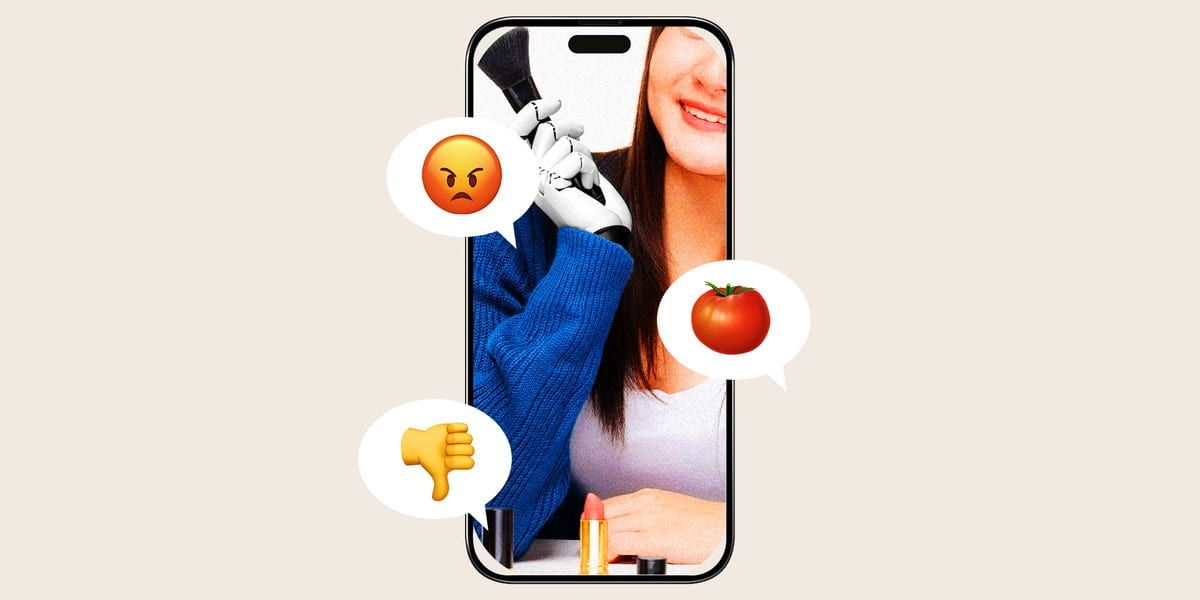
Influencers promoting artificial intelligence companies are facing significant backlash from audiences, leading to strategic shifts and difficult decisions within the creator economy. A recent "Summer Camp" event hosted by OpenAI for influencers drew criticism, with comments labeling the experience "dystopian" and "morally bankrupt."
This marketing mishap underscores the growing public skepticism towards AI. Companies are attempting to counter this by offering high pay rates and carefully crafted messages to creators. Higgsfield AI, for instance, uses sentiment analysis to identify potentially controversial topics and advises creators to avoid them.
Despite these efforts, creators like interior designer Cliff Tan have faced backlash for sponsored content featuring AI tools. The financial incentives are substantial, with top AI companies offering creators five to seven figures, and managers often negotiating a 20% to 30% premium for these deals. However, the potential for long-term damage to a creator's image and earning potential is a significant concern.
Surveys indicate that a majority of Americans anticipate a negative impact from AI. Experts suggest that promoting AI can be "shortsighted" due to the risk of alienating loyal communities built on trust. Some creators are proactively distancing their content from AI-generated "slop," with YouTubers like Billy Young adding disclaimers to their sponsored posts, emphasizing that AI was not used to cut corners in their own creative work.
However, avoiding AI entirely is becoming increasingly difficult as the technology integrates into mainstream creative tools. Many creators admit to using AI tools like ChatGPT, as well as specialized software for editing and automation, highlighting its pervasive presence in content creation.