Key facts
- A significant majority of Americans oppose the construction of data centers in their communities.
- Some tech industry figures suggest that opposition to data centers is fueled by foreign disinformation campaigns.
Some tech leaders are suggesting that opposition to AI data centers in the U.S. is the result of a Chinese-led disinformation campaign, rather than genuine local concerns about environmental impact or jobs.
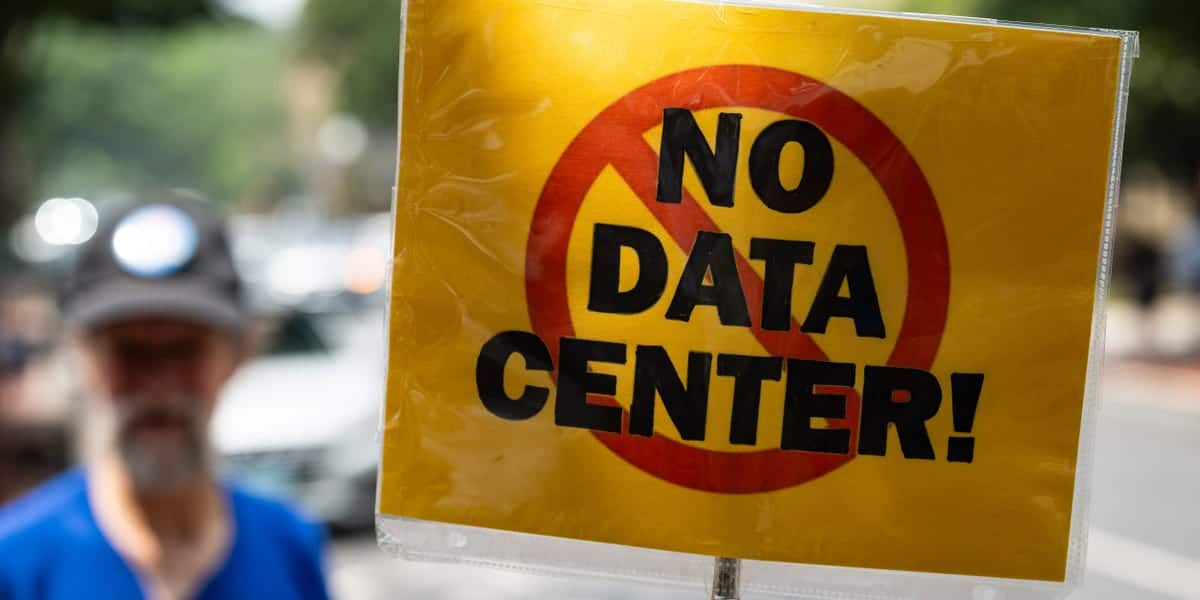
The debate over data center construction highlights the growing tension between the rapid expansion of AI infrastructure and local community concerns, with potential implications for the future development and deployment of AI technologies in the United States.
A growing number of Americans are expressing opposition to the construction of data centers, with a recent survey indicating that 70% do not want them built in their communities. Concerns range from environmental impact and high power consumption to noise pollution and limited job creation.
Amidst this backlash, some leaders within the tech industry are proposing an unconventional explanation: that the opposition is being orchestrated by China as a form of disinformation campaign, or "psyop," aimed at hindering America's progress in the artificial intelligence race. This theory suggests that foreign actors are leveraging the internet to manipulate public opinion against AI infrastructure.
Evidence cited for this theory includes a report from OpenAI detailing how accounts linked to China attempted to use its platform to generate anti-AI messages for social media distribution. However, OpenAI's report also noted a lack of evidence that these efforts had significantly shifted public opinion. Similarly, celebrity investor Kevin O'Leary retracted claims that opponents of his Utah data center project were acting on behalf of China, admitting he had no proof.
Despite these retractions and a lack of definitive proof of a coordinated foreign campaign, the "China is to blame" narrative persists in some pro-AI circles. This perspective is contrasted with the reality that major tech companies, heavily invested in AI and data centers, operate the very social media platforms where such sentiment might be amplified. Critics argue that these platforms, having reduced their trust and safety teams, may be less effective at curbing disinformation.
The industry's primary response to public opposition appears to be a focus on improving messaging and public relations, with Meta even dangling a $1 billion fund for towns that host its data centers. However, some observers suggest that attributing public discontent solely to external manipulation overlooks the genuine, locally-held concerns that communities have about data center development.
Pick the topics you care about. Get only what matters, on your cadence.