Key facts
- AI data centers are the primary driver for the development of solid-state transformers.
- Solid-state transformers use semiconductor switching, unlike traditional coil-and-core designs.
- They offer advantages such as smaller size, modularity, and integrated AC/DC conversion.
- Several US companies have secured significant funding to commercialize this technology.
- The technology has potential applications in EV charging and future home power systems.
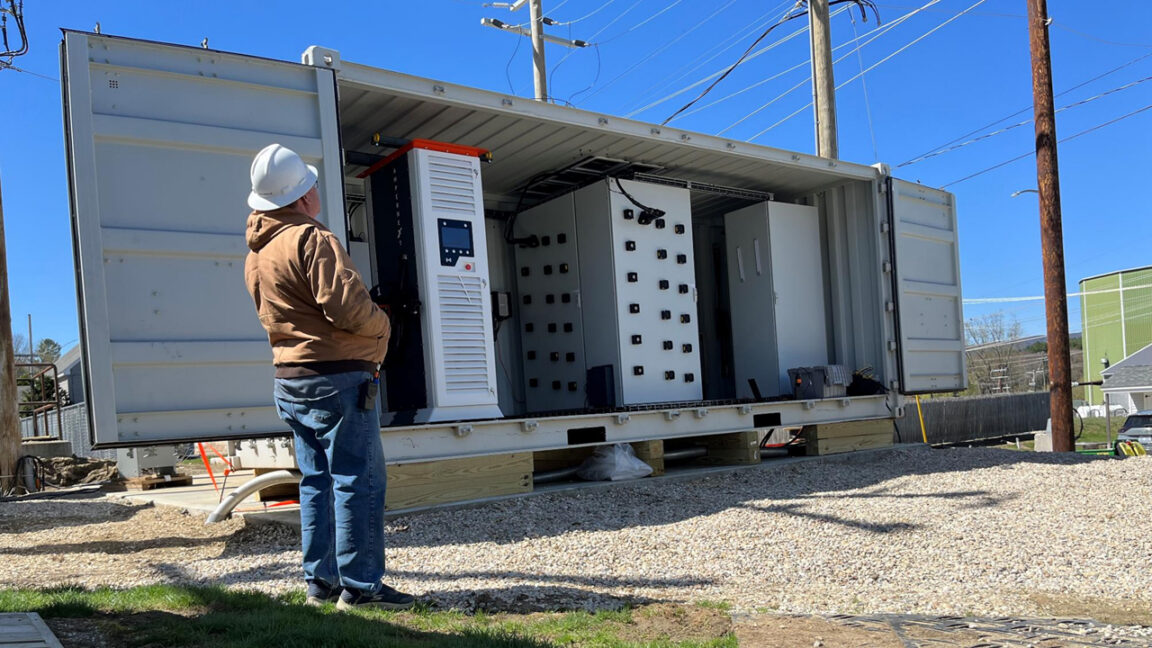
The escalating electricity demands from AI data centers are straining existing power grids, prompting accelerated investment in solid-state transformers (SSTs). These advanced devices utilize semiconductor switching for voltage conversion, offering a modern alternative to the traditional, manually assembled transformers that have been in use since the 1880s. Conventional transformers face manufacturing bottlenecks, leading to multi-year wait times for new units, which hinders grid expansion and the replacement of aging infrastructure.
In contrast, SSTs are designed for mass production using semiconductor materials like silicon carbide. They are physically smaller, lighter, and feature modular designs for easier maintenance and upgrades. A key advantage for AI data centers, which increasingly adopt direct current (DC) power architectures, is the SST's ability to directly convert alternating current (AC) from the grid to DC power required by energy-intensive AI chips, eliminating the need for separate conversion devices.
Srdjan Lukic, a professor at North Carolina State University, highlighted that data centers are currently the primary application driving SST adoption. Several U.S. companies, including Amperesand, Heron Power, and DG Matrix, have collectively raised over $280 million in funding to bring this technology to market. Beyond space savings and material reduction, SSTs could eventually alleviate broader power transformer supply chain shortages.
The benefits of SSTs extend to electric vehicle (EV) charging, which also relies on DC power. NC State has demonstrated a 1 MW SST system capable of handling grid power conversion for EV charging. While engineering and commercialization challenges remain, the adoption by data centers is expected to de-risk the technology for wider use in areas like EV charging infrastructure and potentially in future DC-powered homes.