Key facts
- Emerald AI, a startup valued at $1.05 billion, is developing software to manage data center power consumption.
- The growth of AI necessitates significant physical infrastructure like data centers.
- Communities are increasingly opposing new data center construction due to resource usage and limited local benefits.
- Governors in New York and Texas have introduced measures to curb new data center development.
- Data center developers often highlight tax benefits, but permanent job creation is typically low.
The explosive growth of artificial intelligence is driving a significant demand for data centers, creating new challenges and sparking community backlash across the United States. While AI is often perceived as a digital phenomenon, its physical requirements, including massive power consumption and land use, are becoming a primary constraint.
Emerald AI, a startup now valued at $1.05 billion, aims to address this issue by developing software designed to control and manage the power demand of these computing facilities. This technology seeks to mitigate the growing opposition to new data center construction, which stems from concerns over resource usage and limited tangible benefits for local communities.
The expansion of data centers has become a bipartisan concern, with governors in states like New York and Texas implementing moratoriums or curbs on new developments. Opposition often centers on issues such as water usage and cooling systems, but a significant factor is a lack of trust from communities who have experienced negative outcomes from past industrial projects. The pitch of property tax benefits from developers often contrasts with the reality of minimal permanent job creation, leading to a disconnect where communities bear the impact without commensurate long-term employment.
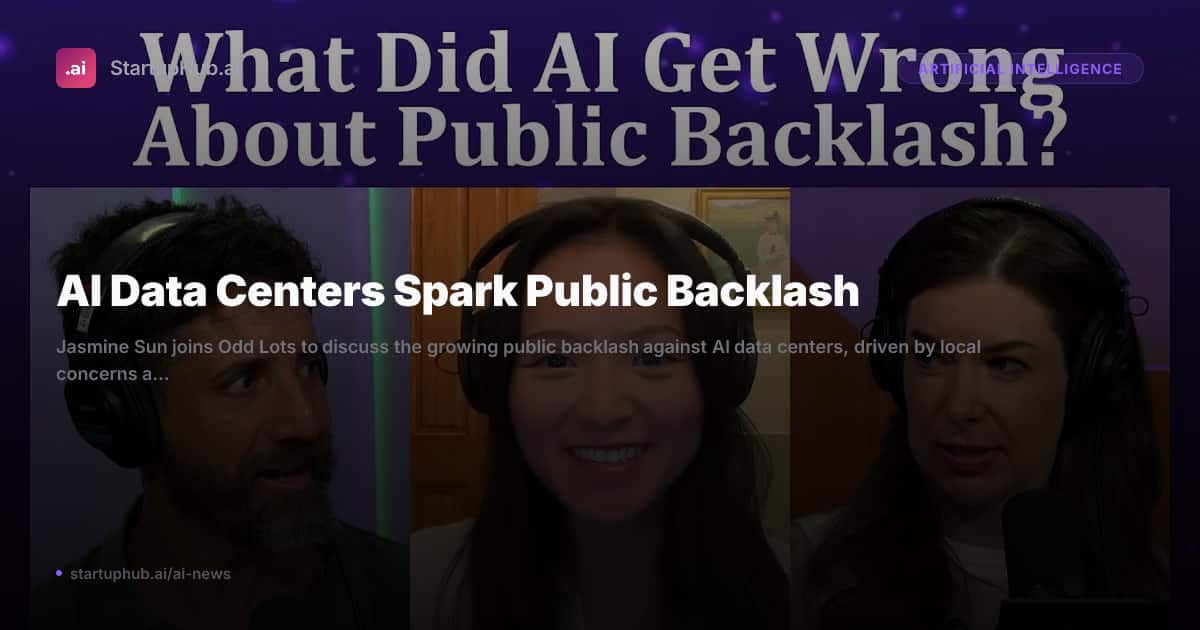
Writer Jasmine Sun highlighted on the Odd Lots podcast that the abstract nature of AI makes it harder for communities to understand and accept the necessity of these large physical structures. The landscape of data center deals is evolving, with communities increasingly realizing their leverage and questioning the need for excessive tax subsidies. The use of non-disclosure agreements in these deals further fuels distrust, shifting the focus towards ensuring direct community benefits.