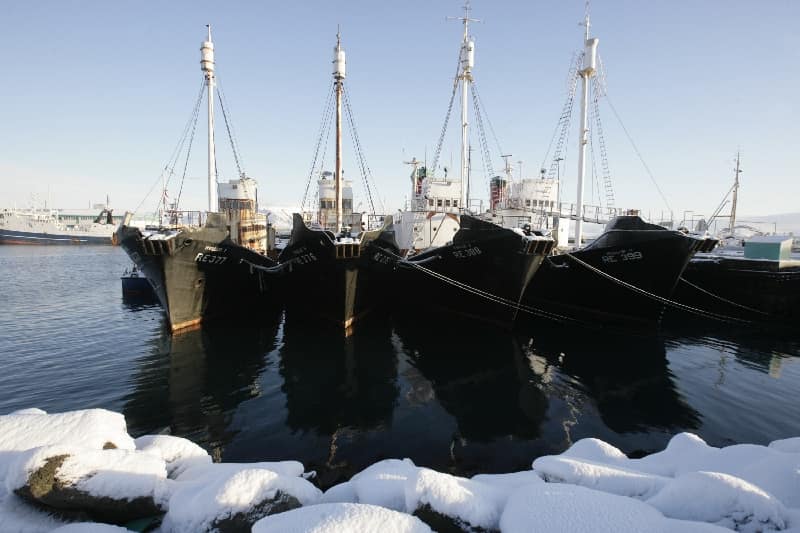
Key facts
- Iceland will propose a bill in February 2027 to permanently ban whaling in its waters.
- The proposed ban would leave Norway and Japan as the only countries continuing commercial whaling.
- As of September 9, 80 fin whales had been caught in Iceland's current hunting season.
- Iceland's quota allows for 150 fin whales to be killed this year.
- Fin whales are classified as vulnerable by the International Union for Conservation of Nature.
Iceland's government plans to introduce legislation in February 2027 that would permanently ban whaling in its waters, a move that would leave Norway and Japan as the world's only nations continuing the practice. The bill follows comments by Iceland's minister of industries, Hanna Katrín Friðriksson, who called for changes to outdated whaling laws and expressed support for an end to the hunt.
Animal welfare groups have welcomed the proposal. Wendy Higgins of Humane World for Animals called the bill a "significant milestone" and said there is "considerable political and public support for this bill to ban commercial whaling." Sharon Livermore, director of marine conservation at the International Fund for Animal Welfare, stated that an update to the laws would be a "groundbreaking step towards modern day marine conservation and animal welfare."
Fin whales, the second-largest animals on Earth, are classified as vulnerable by the International Union for Conservation of Nature. As of September 9, 80 fin whales had been caught in Iceland's current hunting season, which runs until the end of September. Iceland's quota for the year is up to 150 animals. Iceland has only one remaining whaling company, Hvalur, run by Kristján Loftsson, whose current five-year permit runs until 2029.
According to the International Whaling Commission, only Iceland, Norway, and Japan have hunted whales commercially in recent years. Norway resumed commercial whaling in 1993, and Iceland in 2006, despite a global moratorium in 1986. Japan left the IWC in 2019 and resumed commercial whaling in its own waters.