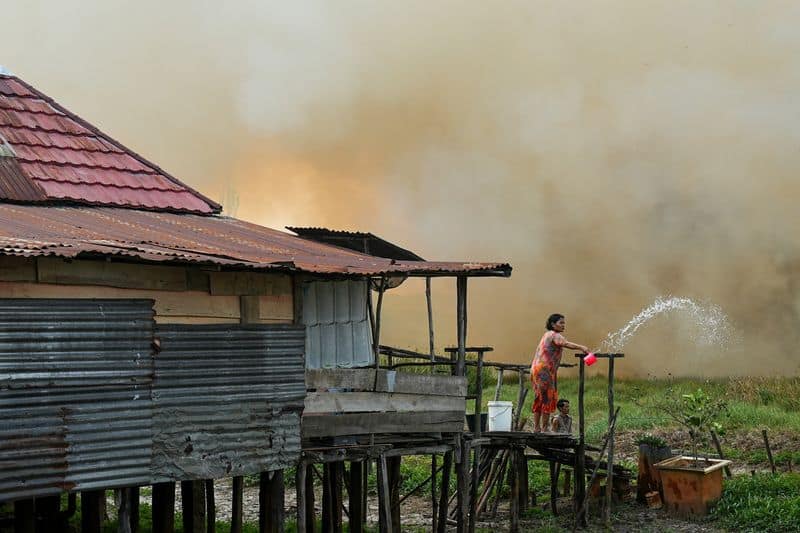
Key facts
- Indonesia is experiencing its most intense wildfire season in 11 years due to "super-El Niño" conditions.
- Wildfire emissions from Indonesia reached 19.7 million metric tons between September 1-7, surpassing Russia and accounting for over a third of global emissions.
- Japan will send three CH-47 Chinook helicopters and 180 crew to assist in fighting the wildfires.
- The fires have caused hazardous air quality, with Pontianak, West Kalimantan, recording an index of 394.
- Finding adequate water sources is a primary challenge in combating the blazes.
Indonesia is grappling with its most severe wildfire season in 11 years, exacerbated by "super-El Niño" conditions that have led to extreme heat and drought. The fires, particularly on Borneo and Sumatra, have generated unprecedented levels of carbon dioxide emissions, surpassing those of Russia and accounting for over a third of the global total in early September. Data from the Copernicus climate monitoring service indicated fire emission intensity in Indonesia was more than ten times that of Russia during the first week of the month.
Authorities are deploying significant resources, including over 50 Indonesian aircraft for water bombing and seeding. Japan is further bolstering these efforts by sending three CH-47 Chinook helicopters and 180 crew members, expected to arrive and commence operations between September 12 and 19. The helicopters will be based in Pontianak, West Kalimantan, one of the hardest-hit areas where air quality has reached hazardous levels.
While the total land burned from January to July was lower than in 2015, August saw a substantial increase, with the number of recorded hotspots exceeding those from the same period in 2015. Experts warn that peat fires, which can burn underground, may be underestimated by current detection methods. The situation is expected to persist and potentially worsen through October, mirroring the severity of the 2015 El Niño event, which caused significant excess deaths across Southeast Asia.