Key facts
- Unitree's 'Superman' humanoid robot can jump two meters high and run at 12.66 meters per second.
- Humanoid robots are beginning to outperform Olympic athletes in physical feats.
Humanoid robots are demonstrating remarkable physical capabilities, with some models now exceeding Olympic records in jumping and running speeds. However, their practical application is limited by the need for advanced AI to control these abilities, with experts suggesting a 'GPT moment' for robotics is still years away.
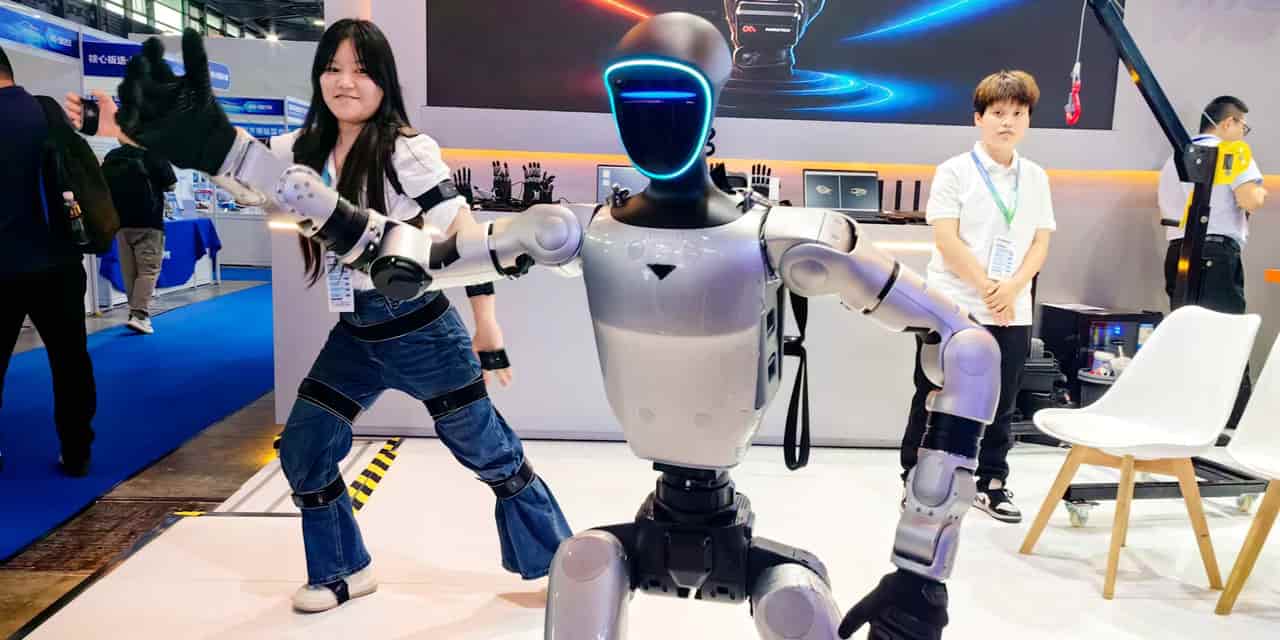
The rapid physical advancements in humanoid robots, now exceeding human athletic records, signal a potential future where machines perform complex tasks. However, the critical bottleneck remains AI development, raising questions about the timeline for widespread adoption and the societal impact of intelligent, highly capable robots.
Humanoid robots are rapidly advancing, with Chinese companies leading the charge. Unitree Robotics recently unveiled its 'Superman' model, which can reportedly jump two meters high and run at 12.66 meters per second, surpassing human Olympic records. However, the practical application of these advanced physical capabilities hinges on the development of sophisticated AI 'brains' for the robots.
A senior executive at Unitree indicated that the robotics industry is still awaiting its 'GPT moment,' estimating that it will take another two to five years for AI to effectively power robots in the physical world, similar to how current AI behaves in virtual environments. Without intelligent control, humanoid robots performing only pre-programmed actions have limited real-world value, reflected in Unitree's current revenue concentration in research and education.
Companies in this sector face a dual challenge: reducing hardware costs through mass production and accelerating AI development. Identifying compelling applications is also critical. Manufacturing sites in Asia are seen as a promising area for deployment, with potential future uses in logistics, caregiving, and as companions for humans. Demonstrations at the World Robot Conference in Beijing are offering glimpses of this future.
Pick the topics you care about. Get only what matters, on your cadence.