Key facts
- Williams said he will assess incoming data before the Fed's December 8-9 policy meeting.
- Williams said he expects inflation to end the year at 3.5%, moderate to just above 2% next year and reach the target in 2028.
- Williams said risks to inflation remain skewed to the upside.
- Williams said the economy should grow 2.75% in both 2026 and 2027.
- Williams said the 4.1% unemployment rate should fall to around 4% next year.
- Williams said tariffs, geopolitical conflicts and the AI surge show up in some goods prices but show little evidence of spilling into broader inflation.
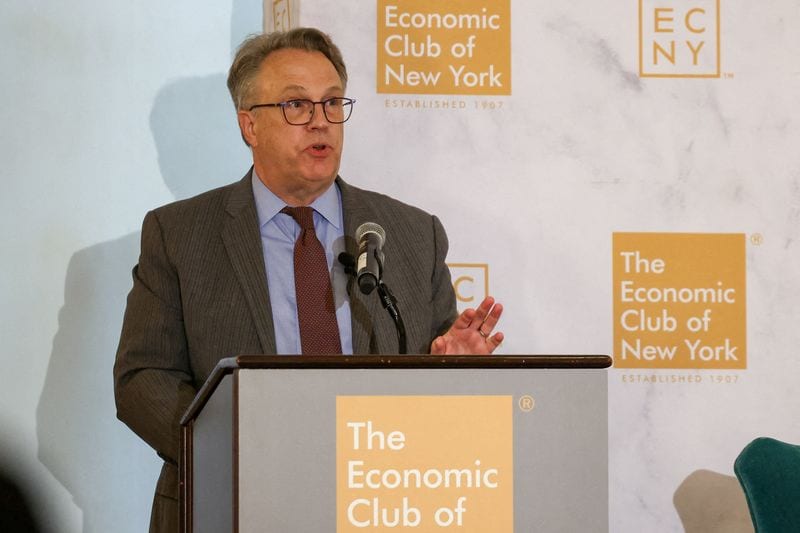
New York Federal Reserve President John Williams said on November 23 that persistently high inflation continues to point the US central bank toward tighter monetary policy. In remarks prepared for delivery to an event at the University of Mount Saint Vincent in New York City, Williams said: "We must take actions over time that will ensure that we get inflation back to our 2% goal in a timely manner and on a sustained basis." He added: "There is still work to do to get that done."
Williams said inflation is "too high" and must be lowered back to the Fed's target. He said he will continue to assess incoming data to decide what action the central bank should take at its December 8-9 policy meeting. Financial markets broadly expect the Fed to raise its policy rate by a quarter of a percentage point next month from the current 3.75%-4.00% range, with more increases to come next year, according to the report.
The Fed last raised rates in September as part of an effort to curb inflation, which has been above the 2% target for more than five years. Central bank officials worry that if this situation persists, the public could lose confidence that inflation will return to that level, the report said.
Williams said he expects inflation to end the year at 3.5% and to moderate to just above 2% next year before easing to the target in 2028. He said risks to inflation continue to be skewed to the upside. Among the key drivers of high price pressures, he said energy prices remain elevated and the outlook on that front is uncertain.
Williams said that "although the effects of tariffs, geopolitical conflicts, and the AI surge are showing up in prices of certain categories of goods, there is little evidence of these spilling over significantly into broader and more persistent inflation." He also said the economy is showing strength and resilience and should grow by 2.75% in both 2026 and 2027, and that the current 4.1% unemployment rate should fall to around 4% next year.
The report also said Williams spoke the same day as a sharp stock market rally triggered by chipmaker Nvidia's announcement that it was reinstating Jensen Huang as CEO, after President Donald Trump urged it to do so.