Key facts
- The Bank of Israel held its benchmark rate at 3.25%, its final decision of 2026, as 12 of 14 Reuters-polled economists expected.
- Annual inflation eased to 1.1% in October from 1.6% in September, inside the official 1% to 3% target.
- The economy grew an annual 8% in the third quarter, or 4% net of production by Israeli firms abroad, the bank said.
- The shekel was up 1.8% at 3.29 per dollar after the decision, having weakened nearly 8% since October 21.
- The central bank said market-priced Fed and ECB rates reflect expectations of continued monetary tightening.
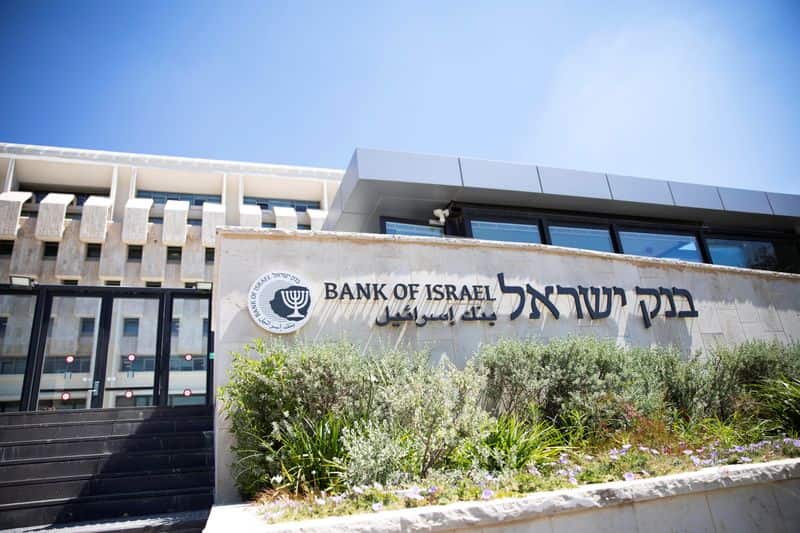
The Bank of Israel held its benchmark short-term interest rate at 3.25% on November 23, 2026, its second straight month without a change, Reuters reported. The central bank cited domestic and global uncertainty, a growing economy, expectations of rising rates globally and a weaker shekel.
The decision was widely expected: 12 of 14 economists polled by Reuters had forecast no move. It was the central bank's final rate decision of 2026. The bank had cut rates in November 2025 and January 2026, paused during the conflict with Iran over fears of supply-driven inflation, then resumed cuts in May, July and September before holding in late October, a week before the October 27 election.
"Domestic and global uncertainty remains high in view of continued geopolitical tensions," the central bank said. Nearly a month after an inconclusive election, no new government has been formed. Neither Prime Minister Benjamin Netanyahu's bloc of right-wing and religious parties nor the opposition led by former military chief Gadi Eisenkot won enough seats to form a coalition. Eisenkot has been given the first nod to try to form a government, and Netanyahu would get a shot if Eisenkot fails.
The shekel had weakened nearly 8% against the dollar since the prior decision on October 21, to a rate of 3.35. After the latest decision the shekel was up 1.8% at 3.29 per dollar, which the report attributed largely to a rise in stock prices after Nvidia reinstated Jensen Huang as CEO.
Annual inflation eased to 1.1% in October from 1.6% in September, within the official 1% to 3% target range, though the central bank said the rate should breach 2% in the coming year. The economy grew an annual 8% in the third quarter, or 4% net of production by Israeli firms abroad, a measure the Bank of Israel called "an indicator that is a more relevant reflection of domestic economic activity." The bank also said market-priced Federal Reserve and European Central Bank rates reflect expectations of continued monetary tightening.