Key facts
- Waller said the Fed should either raise rates by 50 basis points on December 8-9 or signal another hike in January.
- Core consumer prices rose 0.3% in each of the last three months, Waller said, a pace he called roughly 3.5% annualized.
- A half-point move would lift the Fed's benchmark rate to a 4.25%-4.50% range from 3.75%-4%.
- Futures pricing showed about a 95% probability of a 25-basis-point December increase and about 5% for a half-point move.
- Waller said central bank money need not be used in every transaction but its presence at the foundation of the system is essential.
Federal Reserve Governor Christopher Waller said on November 18, 2026 that the central bank may need to raise interest rates by 50 basis points at its December 8-9 meeting unless policymakers clearly signal another increase in January. Speaking in a CNBC interview, Waller said the Fed must either deliver the larger move or set expectations for further tightening.
Waller pointed to three consecutive months in which core consumer prices rose 0.3%, a pace he described as equivalent to roughly 3.5% annualized and well above the Fed's 2% target. October headline consumer prices rose 0.4% and core prices rose 0.3%, both exceeding economists' forecasts. Waller had said in a November 10 speech that another 0.3% core reading would warrant considering a half-point hike.
A half-point increase would lift the Fed's benchmark rate to a 4.25%-4.50% range from 3.75%-4%. Waller said two consecutive quarter-point hikes in December and January would reach the same level, but argued timing and communication matter when inflation expectations are at risk. He said the Fed could use its post-meeting statement or Chairman Kevin Warsh's press conference to set expectations.
Futures pricing showed roughly a 95% probability of a 25-basis-point increase in December and only about a 5% probability of a half-point move.
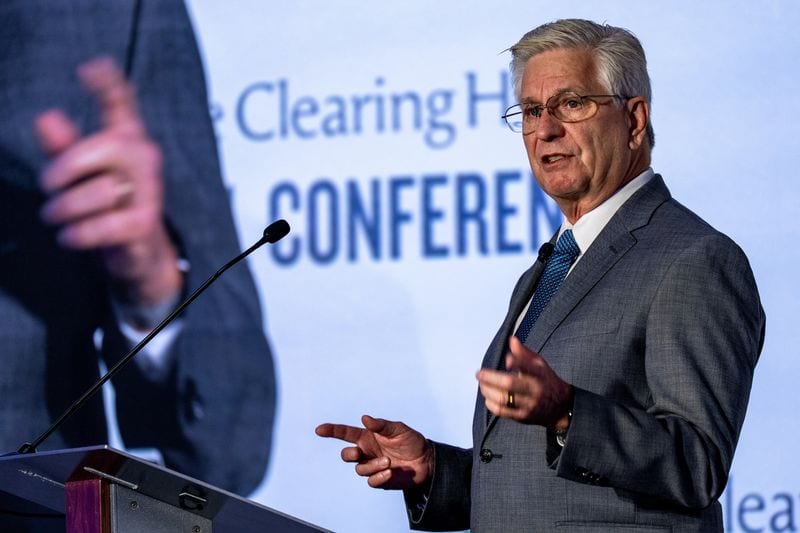
In a separate November 17 speech at The Clearing House Annual Conference in New York, Waller endorsed innovation in tokenized payments but said blockchain-based finance needs reliable settlement infrastructure. He said central bank money need not be used in every transaction or on every platform, but its presence at the foundation of the system is essential.