Key facts
- Paulson said understanding matters more than the specific ways the Fed communicates, in a speech text for the Money Marketeers of New York University.
- Paulson said a shared understanding of the Fed's reaction function let policy move deliberately around the late-October hold.
- Under Chairman Kevin Warsh the Fed has shortened its FOMC policy statement and launched a task force on communication.
- Paulson gave no comment on the near-term interest-rate outlook ahead of the December 8-9 FOMC meeting.
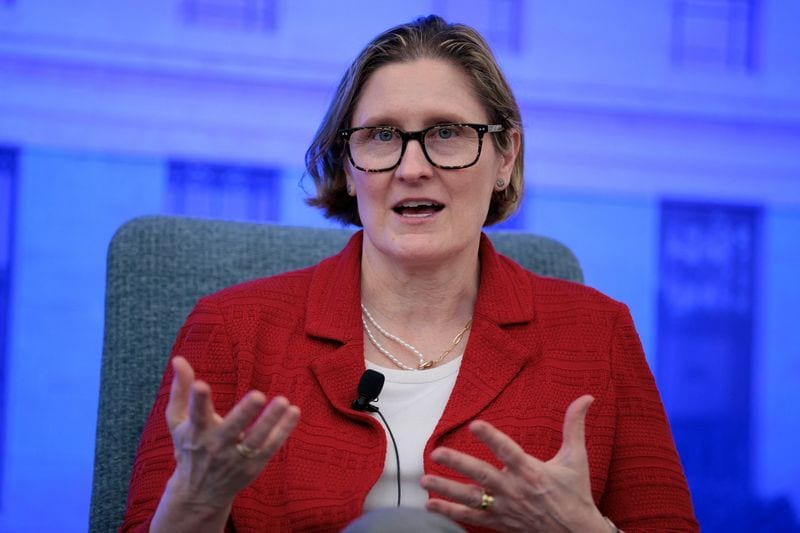
Federal Reserve Bank of Philadelphia President Anna Paulson said on November 19 that central bank communications work better when officials and the public understand one another than when officials provide explicit comments about what they think lies ahead. She spoke in the text of a speech to be delivered before a gathering held by the Money Marketeers of New York University, Reuters reported.
"When we understand each other, we don't need to say as much when new data arrive," Paulson said, adding that the public can then anticipate how the Fed will respond and the Fed can act in ways that are steady and, for the most part, predictable.
Her remarks come as the Fed has been overhauling how it explains its actions. Under new Fed Chairman Kevin Warsh, the Fed has shortened its Federal Open Market Committee policy statement and launched a special task force to weigh how the Fed should communicate its actions and views. Warsh has also stepped almost entirely away from providing guidance about the interest-rate outlook, in contrast to other recent Fed leaders, while many of his colleagues have continued to give regular updates on where they think policy is heading.
Paulson did not comment on the near-term outlook for interest-rate policy. The central bank approaches its December 8-9 FOMC meeting, where it is widely expected to hike rates by a quarter percentage point, to between 4% and 4.25%, according to the report.
Paulson said understanding how the Fed reacts to incoming data is particularly important. "Communication works best when it builds a shared understanding of the reaction function, and that credibility is essential, because people act on messages they trust," she said.
She said that understanding helped markets navigate the Fed's decision to hold rates steady in late October, after boosting them in September and signaling more hikes were in the works. "In October, markets expected further tightening, so the pause did not leave policy behind where it needed to be," she said.