Key facts
- Daly said price pressures are spreading beyond energy and goods into services, where inflation can be sticky.
- Core CPI rose 0.3% in October, on pace for an annualized gain of around 3.6% or more, per the BLS report.
- Economists estimate core PCE rose around 3.3% in October from a year earlier, Daly said.
- Daly said rising bond yields are welcome and tighter financial conditions give the Fed time for calibrated decisions.
- Daly did not join policymakers signaling support for bigger or faster hikes starting at the December 8-9 meeting.
San Francisco Fed President Mary Daly said on November 12 that the Federal Reserve will likely need to raise interest rates further to address elevated inflation, without suggesting urgency. "My bias is that further tightening will be needed," Daly said at the Stanford Institute for Economic Policy Research, adding that price pressures are spreading beyond energy and goods into services, where inflation can be sticky.
Underlying inflation has not cooled as many economists and Fed policymakers expected after a recent easing in energy prices brought down headline inflation. The core consumer price index, which excludes energy and food, rose 0.3% for the third straight month in October, a Bureau of Labor Statistics report showed earlier in the week, on pace for an annualized gain of around 3.6% or more. Economists estimate core PCE rose around 3.3% in October from a year earlier, Daly said. The Fed targets 2% inflation as measured by the 12-month change in the PCE price index.
Those figures have prompted a number of Fed policymakers to signal support for bigger or faster rate hikes beginning with the December 8-9 policy-setting meeting. Daly did not join that group. Rising bond yields "are most welcome," she said, and tighter financial conditions "gives us a little more time to make really calibrated decisions."
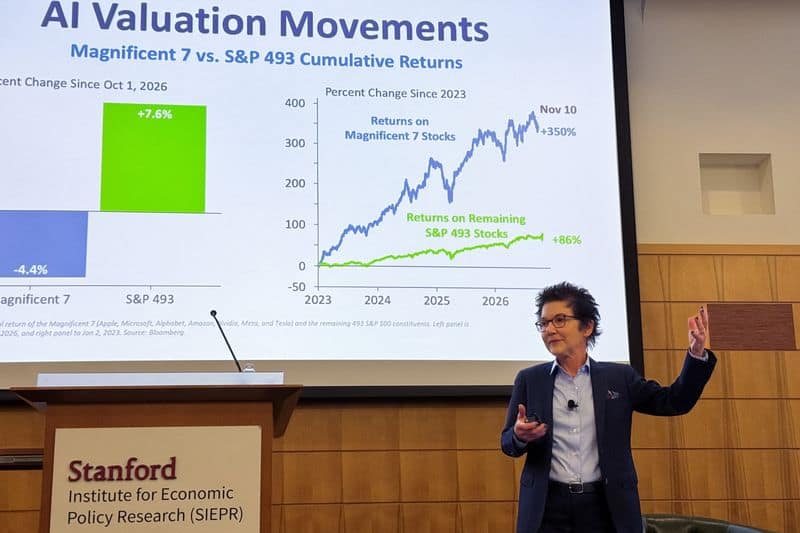
Daly also said AI is not having an outsized impact on inflation or the labor market now but could over the next few years, particularly if it lifts productivity growth as she expects. Recent volatility in AI stock valuations does not signal a lack of enthusiasm about the technology, she said, noting investment in AI-related capital projects such as data centers.