

Key facts
- Hammack said she prefers reaching a restrictive stance through more frequent, smaller adjustments when possible.
- She said gradual increases would reduce the risk of policy falling behind and an inflationary mindset taking hold.
- Hammack said the Fed raised rates in September and that financial markets broadly expect another increase in December.
- She said she also dissented in late July when the Fed left rates unchanged.
- Hammack said the dollar remains the world's reserve currency by a wide margin and that she does not foresee it losing that role.
- She said crypto price volatility makes cryptocurrencies a less certain store of value than the dollar.
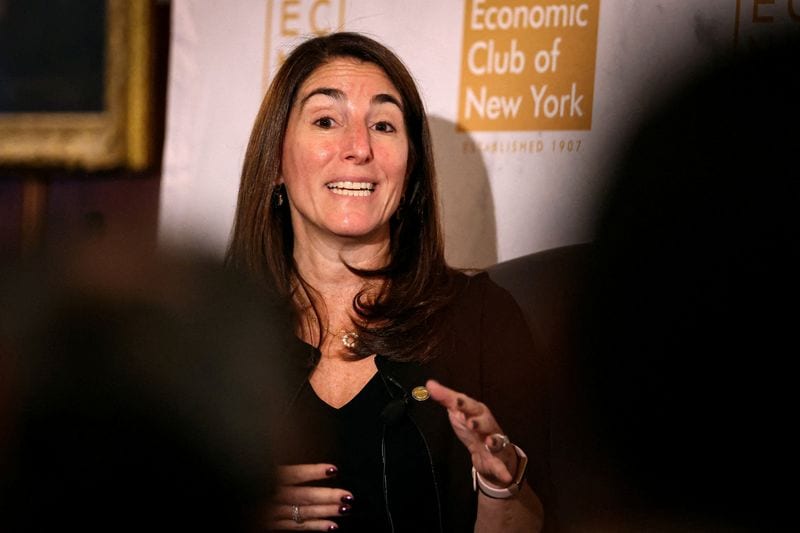
Cleveland Federal Reserve President Beth Hammack said on November 5, 2026 that the US central bank has more work to do to bring inflation down to its 2% target, with price pressures still unacceptably high. In the text of a speech prepared for delivery before an event in Zurich, she said she expects monetary policy will need to move to a restrictive stance to bring inflation back to 2% in a timely manner.
Hammack did not say when she would like the Fed to next raise rates. She said she prefers getting to that stance through more frequent, smaller adjustments when possible, which she said would be less disruptive to households, businesses and financial markets, and would reduce the risk of policy falling behind and an inflationary mindset taking hold.
The Fed left its benchmark interest rate within the 3.75%-4.00% range at its meeting in the week before November 5, even as policymakers acknowledged inflation was too high. The Fed raised rates in September, and Hammack said financial markets broadly expect another increase in December. Hammack and Fed Governor Lisa Cook dissented in favor of a rate hike at that meeting. Hammack, who also dissented in late July when the Fed left rates unchanged, has argued that monetary policy and broader financial conditions are not restraining the economy enough to bring inflation down.
Much of her speech addressed the dollar. She said it remains the world's reserve currency by a wide margin because of the strength of US institutions and the country's legal system, and that maintaining central bank independence is part of preserving those qualities. She said the dollar's share of global reserves may have peaked but that she finds imminent major changes to its international role difficult to envision. On cryptocurrencies, she said their price volatility makes them a less certain store of value than the dollar and that she remains skeptical they pose a threat to the dollar's status.