Key facts
- Governor Lisa D. Cook and Cleveland Fed President Beth M. Hammack voted for a quarter-point increase, the report said.
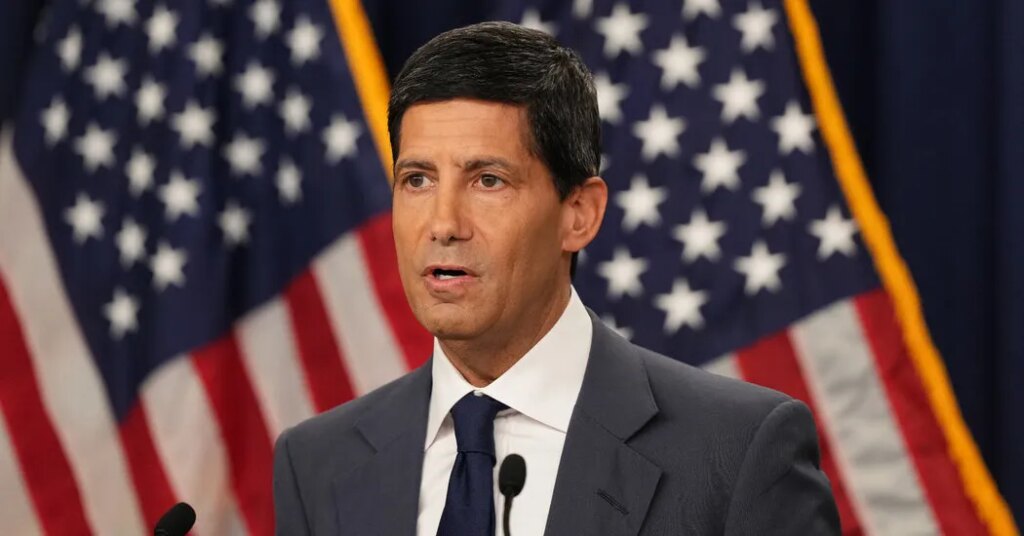
- Fed Chairman Kevin M. Warsh said he was unwilling and unable to call financial conditions tight.
- Warsh said the midterm elections did not play a role in the decision to hold rates steady.
- Warsh cited credit conditions that had become more onerous in recent weeks as a reason not to raise rates.
- The report said the Fed is widely expected to raise rates at its December meeting.
The Federal Reserve held interest rates steady on Wednesday, with 10 officials voting to hold and two voting for a quarter-point increase, according to a report by The New York Times. Governor Lisa D. Cook and Beth M. Hammack, president of the Federal Reserve Bank of Cleveland, dissented in favor of an increase.
Fed Chairman Kevin M. Warsh cited several reasons not to raise rates despite inflation data since the last meeting that he described as far from reassuring. He said the midterm elections did not play a role. He pointed to expectations about future inflation, which he said still suggest confidence the Fed will bring inflation back to its 2 percent target after more than six years of overshooting it. He also said the economy, while growing strongly, was not yet overheating, and that credit conditions for households and businesses had become more onerous in recent weeks.
Warsh said a spurt of volatility across equity markets and costlier financing for artificial intelligence companies were not something the Fed was uncomfortable with. "That isn't something that we're uncomfortable with. It tells me the policy is working," he said. He also said of financial conditions: "I'm unwilling and unable to call them tight." He said taming inflation required "new monetary medicine" and that the Fed was working out the "appropriate protocol."
Claudia Sahm, chief economist at New Century Advisors, said: "Waiting is not costless." Richard Clarida, a former Fed vice chair now at Pimco, said one or two more rate increases after a move in December are plausible, contingent on inflation decelerating. "If we're sitting here a year from now and core inflation is running at 3 percent, then they've got more to do," he said.
The report said a primary driver of inflation has been the war with Iran, which it said unleashed an energy shock that made oil, diesel and other products more expensive, and that AI companies have pushed up prices for computer chips and related equipment. The report said the Fed is widely expected to raise rates at its final meeting of the year in December.