Key facts
- EdgeCortix has unveiled its SAKURA-II chip, designed for physical AI and extreme environments like space and battlefields.
- The SAKURA-II chip has undergone radiation resilience testing under NASA's Electronic Parts and Packaging Program (NEPP).
- EdgeCortix is exploring potential collaboration with SpaceX for deploying its chips in space data centers.
- The company has a multimillion-dollar deal with Kawasaki to integrate technologies for next-generation defense systems.
- EdgeCortix received a 4 billion yen ($28 million) subsidy from NEDO for its SAKURA-X chiplet platform development.
- The SAKURA-X chiplet platform will combine RISC-V architecture with EdgeCortix's DNA (Dynamic Neural Accelerator) model.
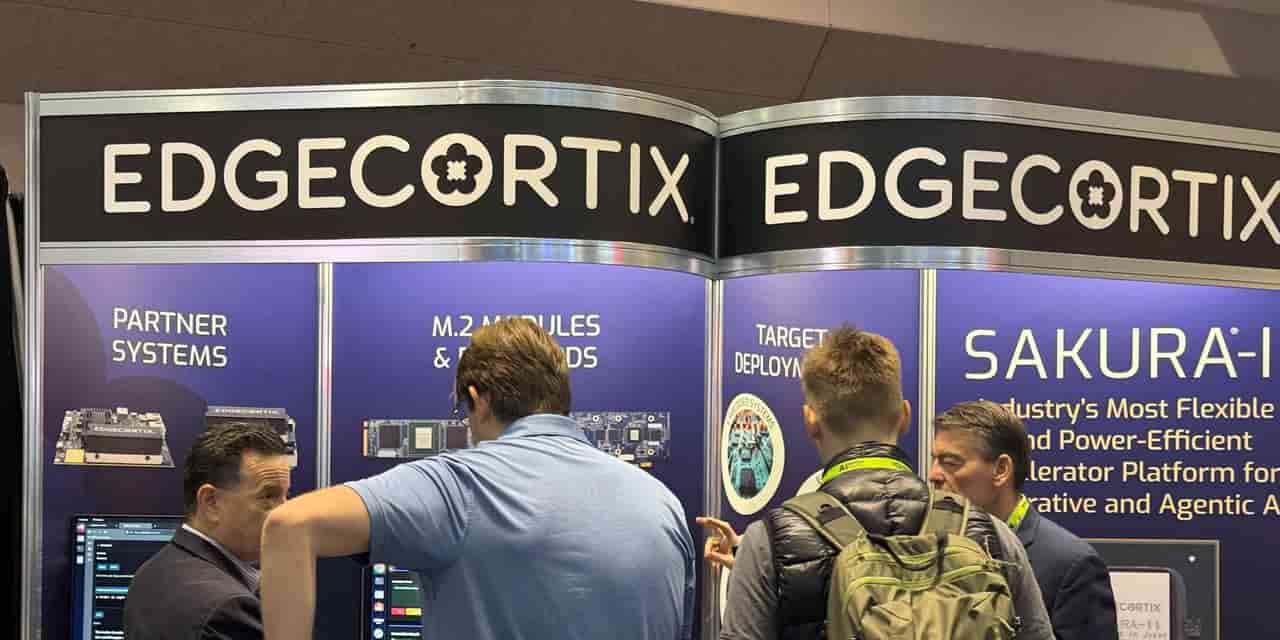
Japanese semiconductor startup EdgeCortix has unveiled its latest chip, SAKURA-II, designed for physical AI and capable of operating in extreme conditions such as outer space and battlefield environments. The company aims to deploy these chips not only on factory floors but also in space, potentially for data centers. EdgeCortix is exploring collaboration with SpaceX for this purpose.
Founded in 2019 by Sakyasingha Dasgupta, EdgeCortix focuses on compact, power-conscious AI chips. The SAKURA-II chip has successfully passed radiation resilience testing conducted under NASA's Electronic Parts and Packaging Program (NEPP) at facilities including Massachusetts General Hospital and Lawrence Berkeley National Lab, confirming its suitability for space missions. The company also demonstrated the chip's capability to run generative AI workloads on small-footprint systems like the Raspberry Pi 5.
EdgeCortix has secured significant backing and partnerships. In February 2025, it became the first Japanese semiconductor company to contract with the US Defence Innovation Unit (DIU), a wing of the U.S. Department of Defense, for benchmarking its SAKURA-II chip across various defense and space use cases. Additionally, on November 6, 2024, EdgeCortix announced it received a 4 billion yen (approximately $28 million) subsidy from Japan's New Energy and Industrial Technology Development Organisation (NEDO). This funding is designated for developing a chiplet platform known as SAKURA-X, which will combine RISC-V architecture with EdgeCortix's proprietary Dynamic Neural Accelerator (DNA) model for edge inference and learning. Production of SAKURA-X is slated to begin in late 2027 at the Japan Advanced Semiconductor Manufacturing (JASM) facility in Kumamoto, a joint venture with TSMC, aligning with Japan's strategy to bolster domestic semiconductor capabilities.