Key facts
- Meta's new VR glasses will launch in spring 2027 for $1,300.
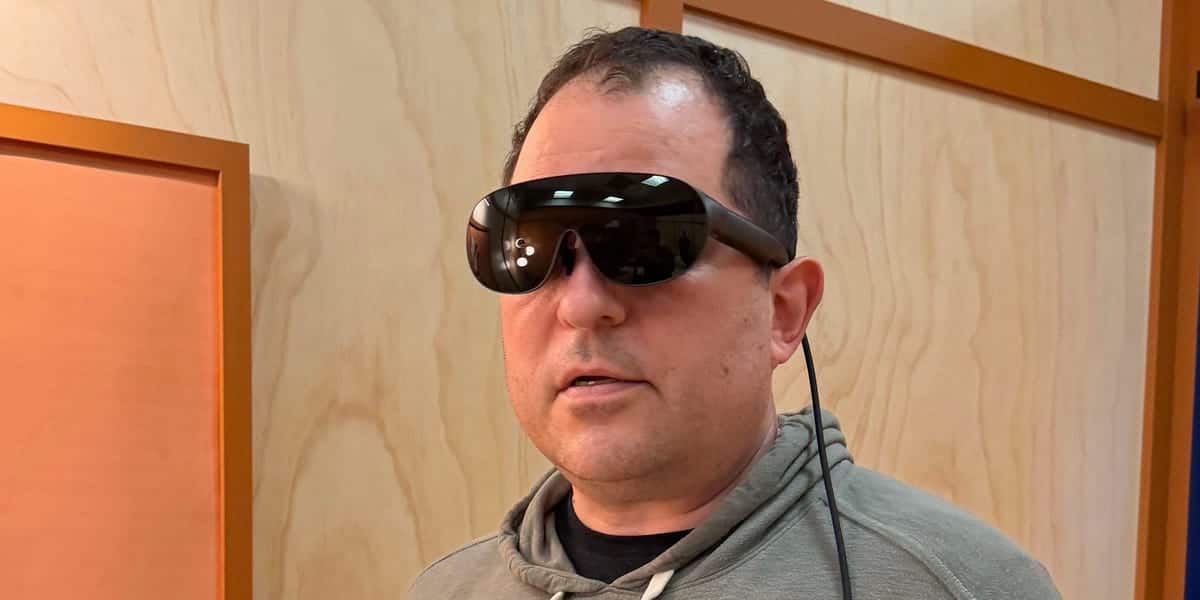
- The headset weighs approximately 100 grams.
- The glasses require a separate 'puck' for battery and computing power.
- The device allows users to manipulate virtual environments with hand gestures.
- Meta aims for its VR glasses to become a primary device for internet access, similar to the iPhone.
Meta has announced its new virtual reality glasses, set to be released in spring 2027 for $1,300, a third of the price of Apple's Vision Pro. The headset weighs approximately 100 grams, significantly lighter than the 600-gram Apple Vision Pro. The device requires a separate 'puck' for battery and computing power, which Meta suggests can be placed nearby or worn on a belt for mobility. Like Apple's offering, the Meta glasses provide an immersive virtual experience with the ability to toggle to a view of the real world. A key new feature is an improved hand-tracking interface that allows users to manipulate virtual elements with their hands at their side or in their lap, an advancement over previous hand-wavy or wristband-based controls.
Despite the technical advancements and lower price point, the reviewer expressed uncertainty about the practical applications of the glasses beyond watching movies, a use case supported by director James Cameron's involvement. The reviewer questioned the necessity of carrying a $1,300 device for plane travel and suggested that for home use, a traditional TV might suffice. Other suggested uses include playing basic games, similar to Meta's existing Quest goggles, or as a work device with multiple virtual screens. The reviewer speculated that the glasses might appeal to 'antisocial coders.'
Meta's continued investment in consumer hardware, despite a lack of mass-market success, is driven by Mark Zuckerberg's hope that such a device could become the next dominant platform for internet access, controlled by Meta. This push aligns with the broader tech industry's focus on AI, with Meta envisioning users interacting with AI agents like its Muse app through these goggles. However, the reviewer noted that the importance of the AI itself might diminish the significance of the hardware platform. While Meta continues to develop other hardware like its Ray-Ban smart glasses, the reviewer pondered if these new VR glasses represent a final attempt at a 'face computer' until clearer use cases emerge.