Key facts
- The loonie traded 0.2% lower at 1.4325 per US dollar, or 69.81 US cents, on November 18.
- The US 2-year yield sat 148.5 basis points above the Canadian equivalent, a gap about 21 basis points wider since the start of November.
- Investors see a roughly 60% chance the Bank of Canada raises interest rates in December.
- Bank of Canada Deputy Governor Toni Gravelle said issuing scenarios on inflation and growth keeps the central bank accountable.
- Canadian 10-year bond yields fell 2.5 basis points to 3.795% on a flatter curve.
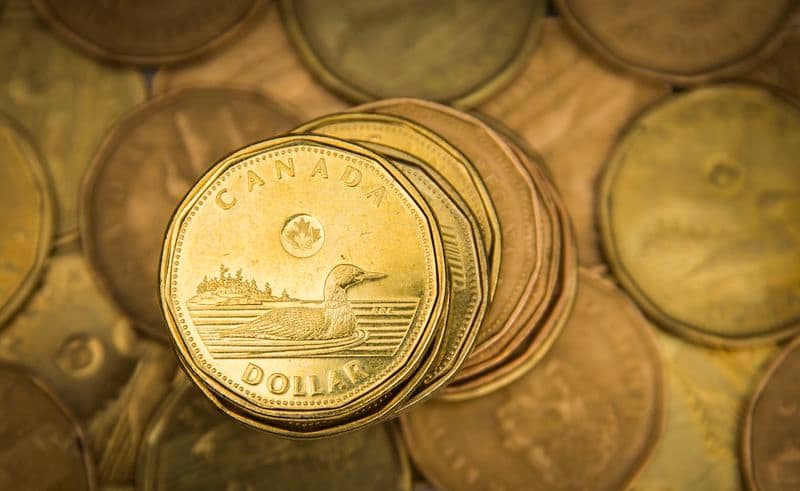
The Canadian dollar weakened to a 19-month low against the US dollar on November 18, trading 0.2% lower at 1.4325 per US dollar, or 69.81 US cents, Reuters reported. It touched 1.4340 intraday, its weakest level since April 2025.
Marc Chandler, chief market strategist at Bannockburn Capital Markets, attributed the move to US data. "I think that the US dollar was looking a bit heavy until we had the stronger-than-expected jobs growth numbers and the hotter-than-expected inflation numbers," he said. "This has turned the dollar around broadly, not just against the Canadian dollar."
The US dollar added to recent gains against a basket of major currencies after Fed Governor Christopher Waller said the central bank needs to become more aggressive in its response to inflation that he fears is changing public psychology about prices. Chandler said his work shows a stronger correlation between changes in the greenback and changes in the 2-year yields. The US 2-year yield has moved about 21 basis points further above the Canadian equivalent since the start of November, to a gap of 148.5 basis points.
The Bank of Canada could also raise interest rates in December, with investors seeing a roughly 60% chance of a hike. Deputy Governor Toni Gravelle said the central bank's practice of issuing scenarios on inflation and growth keeps it accountable and helps make monetary policy more effective.
Oil, one of Canada's major exports, fell after US crude and fuel inventories data added to expectations of a supply surplus. US crude futures were trading 4.1% lower at $82.50 a barrel, which the report said could ease concerns about the inflation outlook. Canadian bond yields fell across a flatter curve, tracking US Treasuries, with the 10-year down 2.5 basis points at 3.795%.