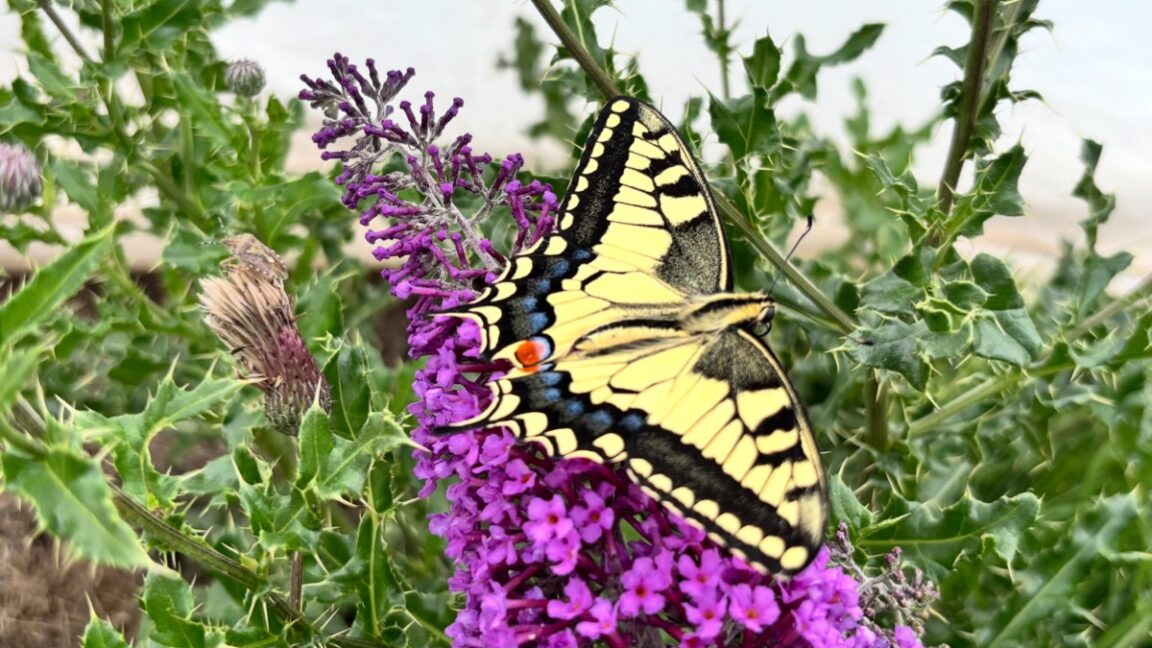
New research published in the journal Nature suggests that the intricate patterns on butterfly wings, combined with their flight dynamics, create a "motion dazzle" effect that helps them evade predators. This phenomenon, analogous to the well-known barbershop pole illusion, makes it difficult for predators like birds to accurately determine a butterfly's speed and direction.
According to co-author George Hancock of the University of Exeter, the stripes and spots on butterfly wings interfere with visual systems' ability to guess motion, boosting false cues while obscuring the butterfly's true heading. This disruption can cause predators to miss their prey during the critical milliseconds of an attack.
The study, led by Hancock and Jolyon Troscianko, utilized high-speed video footage of butterflies, computer models simulating bird vision, and simulations of butterfly species. They found that the deformation of wings during flight, coupled with unpredictable paths, creates shifting stripe angles that contribute to the illusion. Genetic algorithms further indicated that patterns promoting motion dazzle were strongly selected for during evolution, suggesting it's a significant adaptive trait.
This research builds on previous observations of motion dazzle in other animals, such as zebras and certain fish, and provides empirical evidence for its role in butterfly defense. The findings open new avenues for understanding motion vision in nature.