Key facts
- President Volodymyr Zelensky may attend an EU summit on October 15.
- Zelensky's attendance is contingent on Ukraine unlocking two EU accession enlargement clusters.
- The Ukrainian parliament is expected to pass a law on October 12 regarding minority rights.
- Hungary has required this law to drop its veto on Ukraine's EU accession progress.
- Ukraine has opened two of six EU accession enlargement clusters so far.
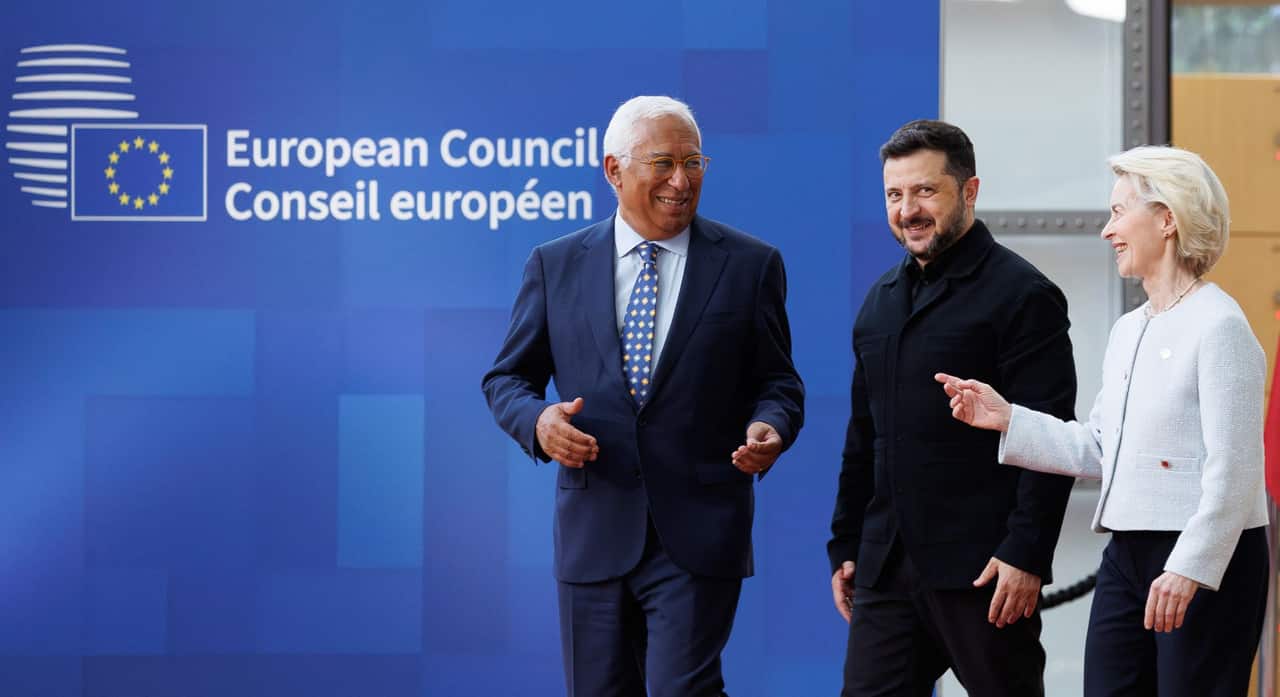
Ukrainian President Volodymyr Zelensky may attend a European Council summit on October 15 if Kyiv successfully advances its EU accession process. This potential breakthrough hinges on the Ukrainian parliament passing a law on October 12 that addresses the rights of the Hungarian-speaking minority, a key condition set by Hungary to lift its veto on further accession steps.
If the law passes and the EU subsequently unlocks the next two "enlargement clusters"—broad areas of reform required for membership—Zelensky is expected to be present at the summit. Ukraine has so far opened two of the six required clusters, with progress stalled due to the delay in passing the ethnic minorities reform, despite an agreement with Budapest in July.
EU Enlargement Commissioner Marta Kos indicated on October 5 that opening two more clusters "next week" was possible, though she noted that member states would need to expedite the procedure. The formal steps to open these clusters, known as intergovernmental conferences (IGCs), typically occur during meetings of European ministers. The next General Affairs Council meeting is scheduled for October 13, but the formalities might push the IGCs to October 14 to align with the leaders' summit.
Successful opening of these clusters would leave two more to be addressed, covering more complex economic sectors where some countries have expressed reservations. However, Kos remains optimistic that all six clusters could be unlocked by year-end.
At the summit, leaders are expected to discuss EU enlargement, Ukraine's war efforts, European defense and security, and the bloc's 2028-2034 budget, which includes a dedicated line for Ukraine support currently set at 89 billion euros ($100 billion).