Key facts
- Leaders are urged to agree on AI governance mechanisms before it is too late.
- The atomic bombings of Hiroshima and Nagasaki offer lessons for managing technological risks.
- AI experts warned in 2023 that unchecked AI could pose an existential risk comparable to nuclear war.
- The United Nations was founded 80 years ago following the atomic bombings.
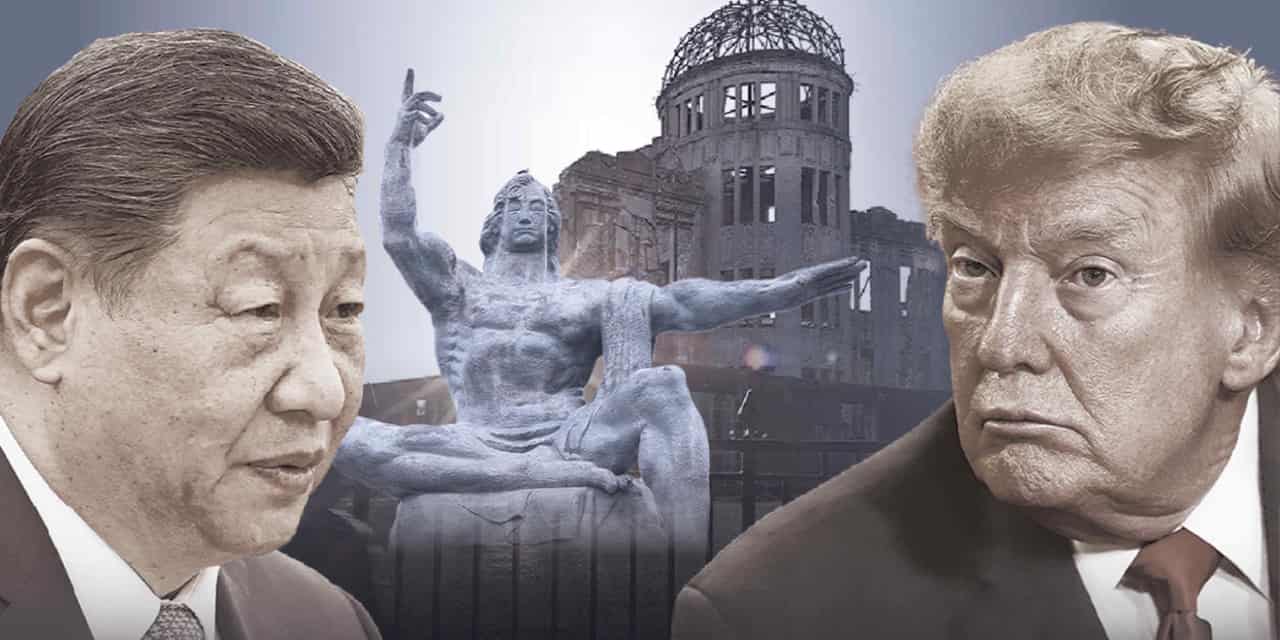
Restricting artificial intelligence while harnessing it for human prosperity is a significant challenge for the 21st century, according to Hiroyuki Akita. U.S. President Donald Trump and Chinese President Xi Jinping agreed at their summit on September 24 to further discuss the issue of AI governance.
The atomic bombings of Hiroshima and Nagasaki, which occurred 80 years ago, offer urgent lessons for leaders today, particularly in the context of managing technological risks. The founding of the United Nations 80 years ago also reshaped the global order and underscores the need for international cooperation. Experts have warned that unchecked AI could pose an existential risk on par with nuclear war, highlighting a critical governance gap.
Africa's rapid digital transformation presents a similar challenge, where insufficient governance of AI adoption in sectors like agriculture and finance could turn opportunity into catastrophe. While AI offers promise in areas such as conflict prediction and healthcare scaling, it also carries risks like autonomous weapons and AI-driven misinformation. The story of Hiroshima, a city defined by renewal after devastation, exemplifies how purpose, policy, and technology must intersect for societies to thrive. Africa has an opportunity to lead in ethical AI and shape regulation anchored in values, emphasizing mechanism design, transparency, and regional cooperation.
The commitment to "save succeeding generations from the scourge of war," reaffirmed in the recent Pact for the Future and the Declaration on Future Generations, calls for long-term stewardship over short-term gains. As Viktor Frankl observed, "Since Auschwitz, we know what man is capable of. And since Hiroshima, we know what is at stake." The challenge lies in ensuring that human values guide technological power, with machines enhancing rather than replacing human judgment and agency.