Key facts
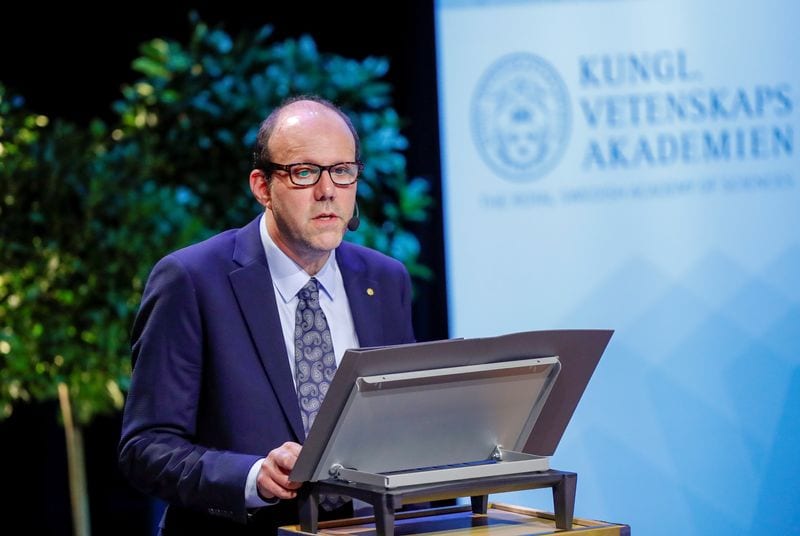
- Michael Kremer, a Nobel laureate and University of Chicago professor, has been named the World Bank's next chief economist.
- Kremer will succeed Indermit Gill, who retired last month.
- He will start his new role on October 1.
- Kremer won the Nobel Prize in Economic Sciences in 2019 for his experimental approach to alleviating global poverty.
- World Bank President Ajay Banga stated Kremer's expertise is needed to address urgent development challenges.
- Kremer's research has focused on innovation in education, health, water, finance, and agriculture in developing countries.
The World Bank announced on Wednesday that Michael Kremer, a Nobel laureate and professor at the University of Chicago, will be its next chief economist. He succeeds Indermit Gill, who retired last month. Kremer, 61, is recognized for his work on alleviating global poverty through experimental approaches, a methodology that earned him the Nobel Prize in Economic Sciences in 2019 alongside Esther Duflo and Abhijit Banerjee. He previously taught economics at Harvard University.
Kremer is set to begin his new role on October 1, just before the World Bank and International Monetary Fund's annual meetings in Bangkok. His research has focused on innovations in education, health, water, finance, and agriculture in developing countries, often through programs that have been scaled up to reach millions. World Bank President Ajay Banga highlighted Kremer's proven ability to identify and implement effective development solutions at scale, emphasizing the need for such thinking amid urgent global challenges, including job creation for a growing youth population.
The appointment comes as developing nations grapple with increased interest rates and higher energy prices, compounded by a projected 23% drop in official development assistance in 2025. Kremer is the first chief economist to join the bank with a Nobel Prize already in hand; previous laureates like Joseph Stiglitz and Paul Romer received the honor after their tenures at the World Bank.
Kremer co-founded the Development Innovation Lab at the University of Chicago and has been involved in initiatives like Advance Market Commitments to incentivize drug development for low-income countries. His research on de-worming school children led to widespread treatment programs, and he has also worked on AI-based agricultural forecasting and founded Precision Development to enhance smallholder farmer productivity. He is married to economist Rachel Glennerster.