Key facts
- A federal judge declined to immediately block President Donald Trump's administration from implementing a new executive order limiting birthright citizenship.
- The order was issued after the U.S. Supreme Court rejected Trump's previous effort.
- U.S. District Judge Deborah Boardman rejected a request for a temporary restraining order sought by immigrant rights advocates.
- The ACLU and other groups have asked a federal judge to block the new executive orders.
- A federal judge ruled that laws used to cancel visas and initiate deportation proceedings against noncitizen college students based on their pro-Palestinian advocacy are unconstitutional.
- U.S. District Judge Noel Wise chastised the U.S. State Department and U.S. Department of Homeland Security for targeting non-citizens for deportation based on their speech.
A federal judge has declined to immediately block President Donald Trump's administration from implementing a new executive order that aims to limit eligibility for birthright citizenship. U.S. District Judge Deborah Boardman rejected a request for a temporary restraining order sought by immigrant rights advocates, who had previously secured a ruling blocking the administration's initial order.
The latest executive order was issued after the U.S. Supreme Court rejected Trump's previous effort to curtail birthright citizenship. The Supreme Court had stated that Trump's original executive order violated the U.S. Constitution's 14th Amendment.
The American Civil Liberties Union (ACLU) and other advocacy groups have asked a federal judge to block Trump's new orders, calling them an improper attempt to evade the Supreme Court's ruling. They argue that the president continues to claim the power to deny citizenship to certain categories of children.
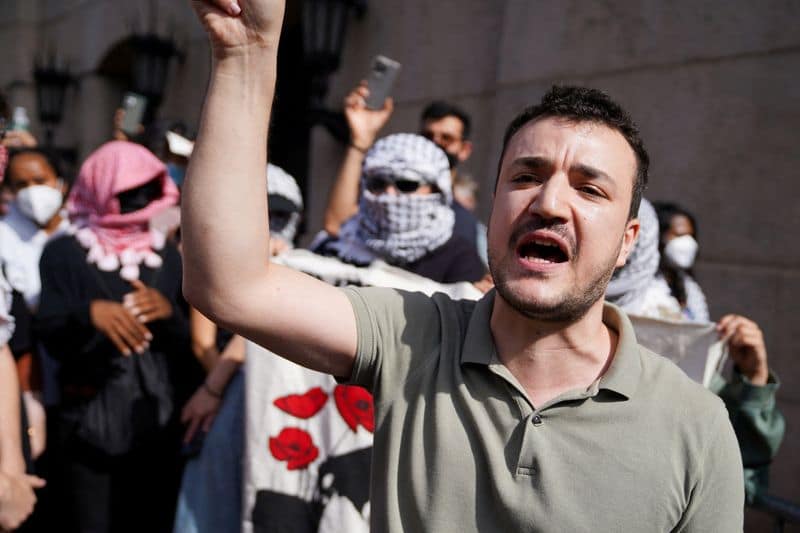
In a separate but related development, U.S. District Judge Noel Wise ruled that laws used by the Trump administration to cancel visas and initiate deportation proceedings against noncitizen college students based on their pro-Palestinian advocacy are unconstitutional. Judge Wise chastised the U.S. State Department and U.S. Department of Homeland Security for deploying immigration law provisions to target non-citizens for expressing views they wanted to suppress, stating that free speech is evidence of the country's democratic strength.
The ruling focused on the administration's practice, starting in March 2025, of revoking visas and detaining non-citizens who engaged in pro-Palestinian advocacy on campus. The newspaper's lawyers argued that two provisions of the Immigration and Nationality Act violated the U.S. Constitution's First and Fifth Amendments as applied to constitutionally protected speech. Judge Wise agreed, stating that when a noncitizen's speech is the reason for visa revocation and deportation, the government is singling out that speech for disfavored treatment based on its viewpoint or content.
A White House spokesperson stated that the Trump administration has always followed court orders and that all actions taken are consistent with the court's rulings. Trump has sought to dismantle birthright citizenship as a central part of his immigration policy. His latest orders specifically target 'birth tourism,' where individuals travel to the U.S. to give birth and secure citizenship for their child.
Previously, a federal judge in Maryland had ruled that the Trump administration could not withhold citizenship from children born to parents living in the U.S. illegally or temporarily, marking the fourth court decision to block the president's birthright citizenship order nationwide since a key Supreme Court ruling in June.