Key facts
- Taiwan plans to acquire 111 US-made Himars missile systems.
Taiwan's planned acquisition of 111 US-made Himars missile systems, in addition to US military assets, could significantly alter the calculus of a potential Chinese invasion. The systems are key to Taiwan's evolving asymmetric-warfare strategy, aiming to increase survivability and strike targets in China.
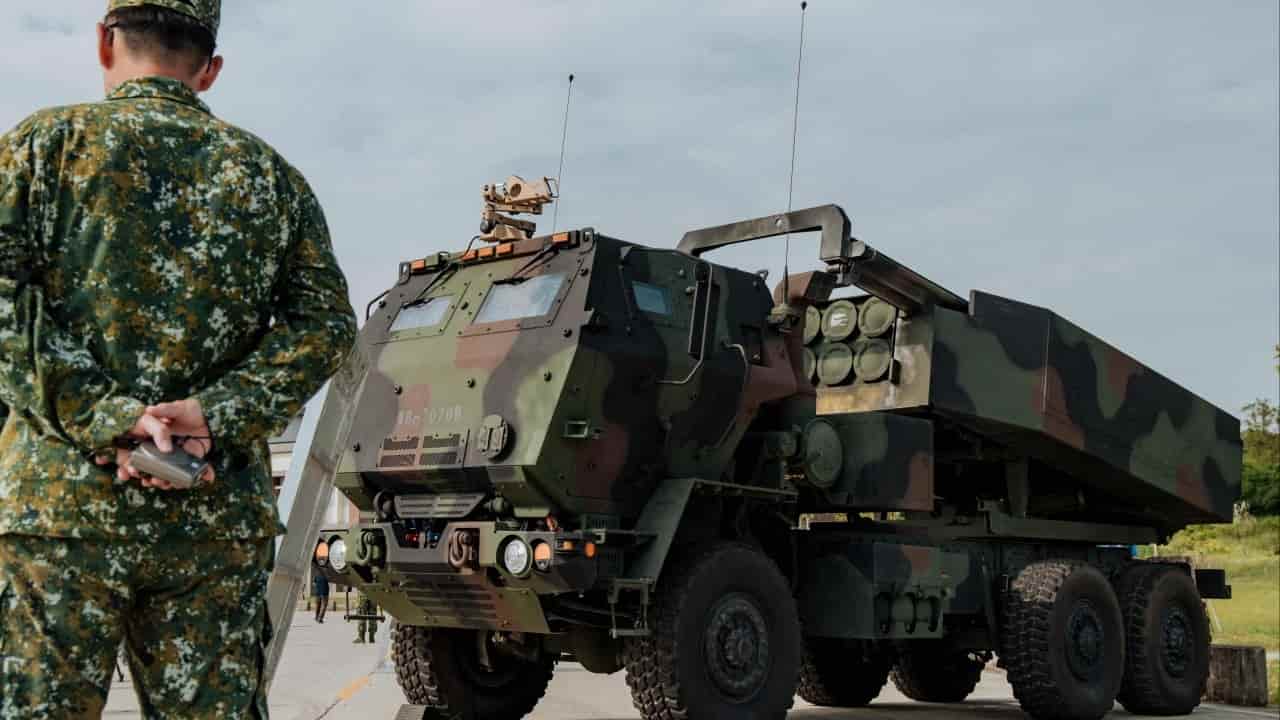
Taiwan's acquisition of advanced rocket artillery systems like Himars is central to its strategy to deter a potential Chinese invasion by increasing its survivability and ability to strike targets in mainland China, thereby raising the stakes for any cross-strait conflict.
A potential conflict in the Taiwan Strait could involve a clash between the US-made Himars and China's PHL-16 (PCL-191) rocket systems. Taiwan is slated to receive all 29 of its initial Himars orders by the end of the year, with an additional 82 approved in a subsequent deal, bringing its total planned acquisition to 111 systems, not including US military assets.
This arms package, part of an $11 billion deal, is seen as significantly transforming Taiwan's strike capabilities and supporting its developing asymmetric-warfare concept. Analysts suggest that, similar to how rocket artillery challenged Russia's assumptions in the Baltic states, these new capabilities fundamentally alter the calculus for a potential Chinese invasion across the Taiwan Strait.
Taiwan's defense strategy has evolved from a symmetric approach focused on decisive battles at the landing beach to a defense-in-depth strategy emphasizing attrition and multi-domain denial. This shift acknowledges that Taiwan may not be able to prevent Chinese forces from landing but aims to grind down the People's Liberation Army and prevent them from seizing key locations by leveraging its mountainous and urban terrain, in addition to the Taiwan Strait itself.
Pick the topics you care about. Get only what matters, on your cadence.