Key facts
- Serhiy Ryndova, 68, left Oleshky on October 30 with hundreds of other residents during a ceasefire-backed evacuation.
- Larysa Ryndova, 72, traveled 2,000 km from England to meet him and bring him back to Britain.
- The couple last saw each other in 2022, when Larysa fled three months into the occupation.
- Serhiy said food deliveries to Oleshky stopped completely around April after the two men who brought supplies died.
- Serhiy said landmines were laid on all roads and inside the town, and that residents were killed by them.
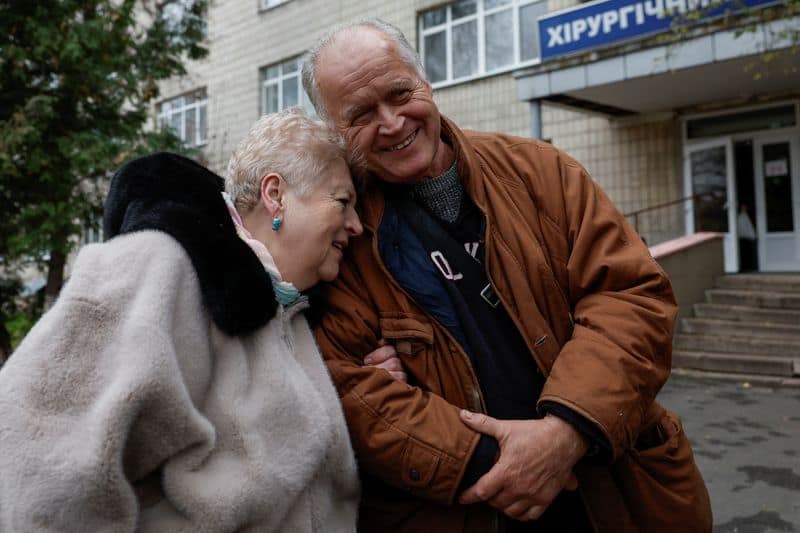
Larysa Ryndova, 72, met her husband Serhiy, 68, outside a hospital in Kyiv, the first time she had seen him in 4-1/2 years, Reuters reported on November 9, 2026. The couple last saw each other in 2022, when Larysa fled to England to live with their son three months into the Russian occupation of their hometown of Oleshky in southern Ukraine. Serhiy stayed behind to look after the family home.
Serhiy left Oleshky on October 30 with hundreds of other residents, evacuated during a ceasefire that Reuters said US first lady Melania Trump was involved in brokering, with the additional involvement of Pope Leo. The evacuees were moved by buses and planes through occupied land, Russia and Belarus, while Larysa set out on her own 2,000-km (1,200-mile) journey to meet him and bring him back with her to Britain.
"I can't believe you are here," Larysa kept repeating, her mascara smudged with tears after the embrace. "Honestly, I can't believe it myself," Serhiy replied. She said he looked haggard in the first pictures she saw of him crossing into Ukraine: "It's hard to recognise him."
Serhiy described Oleshky as a "zone of death" where residents faced constant drone attacks and lived without power and heating. He said he survived on humanitarian aid he had stockpiled, including noodles, grains and sometimes canned meat and fish, and tried frying flatbreads with flour stored before the war that was riddled with weevils. He said food deliveries stopped completely after the two men who used to bring supplies died around April. Locals shared what they had, and some risked a 20-km journey on foot or bicycle to Radensk for supplies, where rare provisions were sold at severely inflated prices, he said.