Key facts
- Thomas Barrack, US special envoy to Iraq and Syria, advocated for TI Capital to join the $15 billion Kirkuk-Baniyas oil pipeline project.
- Barrack has a financial interest in a real-estate venture managed by TI Capital, entitling him to up to 20% of profits.
- Barrack has not filed a conflict-of-interest waiver for his involvement with TI Capital on the pipeline project.
- A State Department spokesperson stated Barrack has no direct financial interest in the pipeline but acknowledged his ties to TI Capital's real-estate venture.
- The pipeline would bypass the Strait of Hormuz, a chokepoint for oil transport.
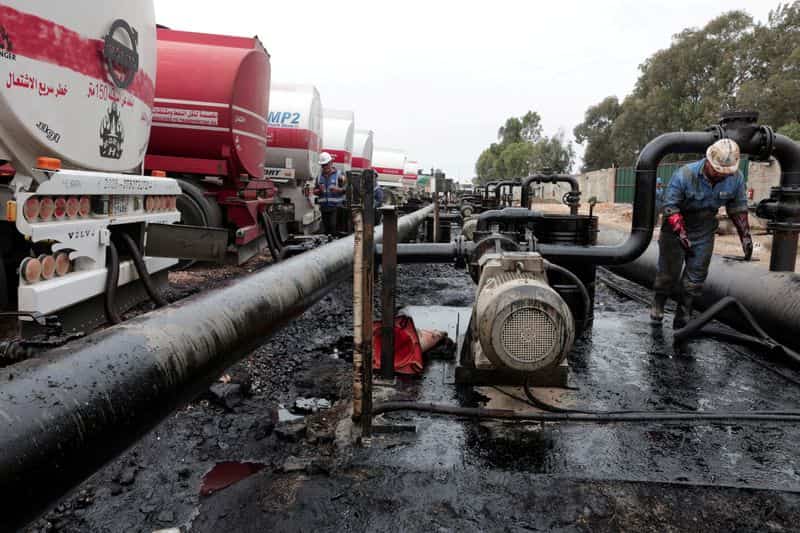
Thomas Barrack, a top US diplomat in the Middle East and special envoy to Iraq and Syria, has advocated for a firm run by his business partner to participate in the development of a significant oil pipeline project, raising concerns about potential violations of federal ethics rules. The project involves rehabilitating the Kirkuk-Baniyas Pipeline, which would bypass the Strait of Hormuz.
In July, Iraq and Syria signed memorandums of understanding with a consortium that includes TI Capital, a Californian investment group founded by Ziad Ghandour, along with Chevron and Qatar’s UCC Holding. These agreements are for technical and financial studies related to the pipeline's rehabilitation.
Barrack has a long-standing business relationship with Ghandour and TI Capital. Public records indicate that at the time of his confirmation hearings in 2025, Barrack held a financial interest entitling him to as much as a fifth of the profits from a real-estate venture near San Francisco managed by TI Capital, which he stated he intended to retain. During engagements with Syrian and Iraqi officials after the start of the war in Iran, Barrack pressed for Ghandour's firm to be included in the pipeline project, according to sources with direct knowledge.
On June 16, a month before the consortium agreement, Barrack and Iraqi Prime Minister Ali al-Zaidi issued a joint statement commending Iraq's decision to advance a memorandum of understanding with TI Capital for the pipeline's rehabilitation. The statement did not mention Chevron or UCC Holding.
Reuters found no evidence that Barrack stands to profit directly from the pipeline itself. However, ethics lawyers noted that his advocacy for a business associate could be a serious issue under regulations prohibiting officials from participating in matters that could question their impartiality due to personal or business relationships. The appearance of a conflict of interest is a significant ethical concern, according to Ann Skeet, interim executive director at the Markkula Center for Applied Ethics.
Former White House ethics lawyer Richard Painter suggested that Barrack should have completely recused himself from the matter. Don Fox, a former general counsel of the US Office of Government Ethics, stated that Barrack's promotion of TI Capital could also violate regulations against using one's office to endorse an enterprise for the private gain of affiliated individuals.
Barrack has not filed a conflict-of-interest waiver with the US Office of Government Ethics concerning TI Capital's participation in the project. His ethics agreement before confirmation hearings committed him to recusing himself from matters directly affecting the financial interests of his real-estate venture unless he obtained a waiver.
Barrack's office and Chevron declined to comment. TI Capital, Ghandour, and UCC Holding did not respond to requests for comment. A State Department spokesperson stated that Barrack has no affiliation with, role in, or financial interest in the pipeline project, while acknowledging his relationship with the TI Capital real-estate venture. The spokesperson added that Barrack's comments reflect US policy interests in regional energy integration and that he was certified to be in compliance with ethics rules.
Barrack's financial disclosure in March 2025 listed an equity stake in ACD-TI Oakley Investment LLC, a venture managed by TI Capital and headed by Ghandour, for which he provided services and was entitled to profit sharing. He also disclosed a paid consulting role with the venture in 2024. He listed ACD-TI Oakley among assets he would retain rather than sell.
The Kirkuk-Baniyas pipeline has been inactive since the 2003 US invasion of Iraq. The idea of involving TI Capital was reportedly raised by Barrack in May at the Milken Institute Global Conference. Barrack and Ghandour also participated in a panel at the conference discussing energy supply lines in the Middle East. Barrack has engaged in business with Ghandour since at least 2020, including a dissolved blank-check SPAC before Barrack was arrested and later acquitted on charges of acting as an unregistered agent of the UAE.
Separately, TI Capital was named in July as part of another consortium with UCC Holding and ConocoPhillips to assess Iraq's Akkas gas field. The firm also claims involvement in projects at Syria's Tartous port, which Reuters could not verify.