Key facts
- President Trump has not decided whether to allow the Pentagon to livestream the execution of Nidal Hasan.
- Vice President JD Vance expressed skepticism about the livestream plan and stated he would not watch it.
- Republican lawmakers, religious leaders, and the UN human rights office oppose the livestreaming of Hasan's execution.
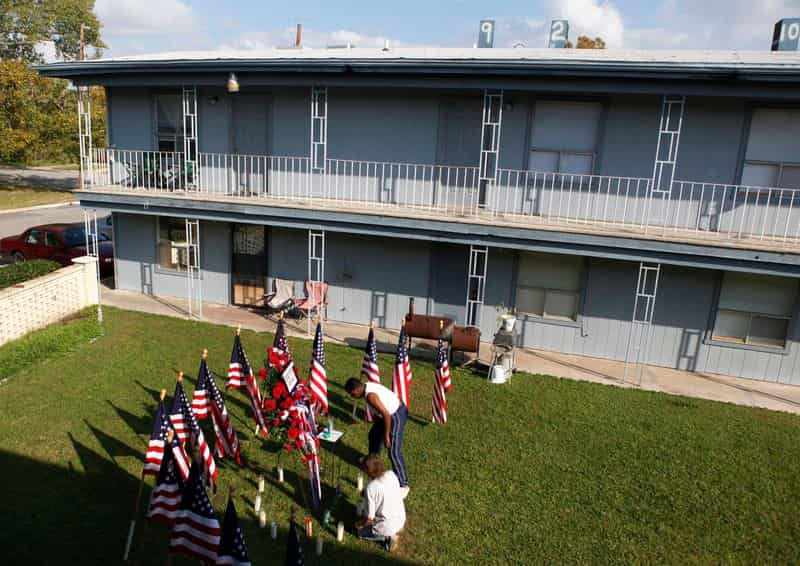
- Hasan, convicted of killing 13 people at Fort Hood in 2009, is scheduled for execution by firing squad on December 3.
- Opponents argue the livestream would be a public spectacle, provide propaganda for terrorists, and violate human rights.
President Donald Trump has not yet made a determination on whether to allow the Pentagon to livestream the execution of former US Army psychiatrist Nidal Hasan, who is scheduled to be executed by firing squad on December 3 for the 2009 Fort Hood shooting spree that killed 13 people. The plan has drawn significant opposition from Republican lawmakers, religious leaders, and international bodies.
Vice President JD Vance expressed skepticism about the livestream, stating he would not watch it and warning it could serve as a recruiting tool for terrorists. Several Republican lawmakers, including Senators John Curtis and Thom Tillis, and Representatives Austin Scott and Michael Baumgartner, have publicly opposed the idea. Curtis argued it would cultivate an appetite for executions as entertainment, while Tillis and Scott suggested it aligns with the actions of Islamist extremists. Baumgartner called for reconsideration of the plan.
Defense Secretary Pete Hegseth confirmed the plans for the livestreamed execution. Archbishop Paul Coakley, president of the United States Conference of Catholic Bishops, condemned the proposal as a 'barbaric promotion of a culture of death.' Walter Kim, president of the National Association of Evangelicals, echoed concerns about turning a solemn responsibility into a public spectacle. Joe Kent, former head of Trump's National Counterterrorism Center, warned it would provide propaganda for terrorists.
The UN human rights office stated that public executions violate prohibitions against torture and constitute cruel, inhuman, or degrading treatment. Amnesty International called the use of a firing squad 'reprehensible.' Mental health experts also raised concerns about potential trauma to children.
A senior White House official indicated that Trump does not currently oppose the livestream but is hearing concerns from various groups. US law prohibits the recording or broadcasting of executions in the federal prison system, though military regulations differ. The military has not executed anyone by firing squad since 1945. The Pentagon has not yet confirmed if families of the victims will be invited to attend.