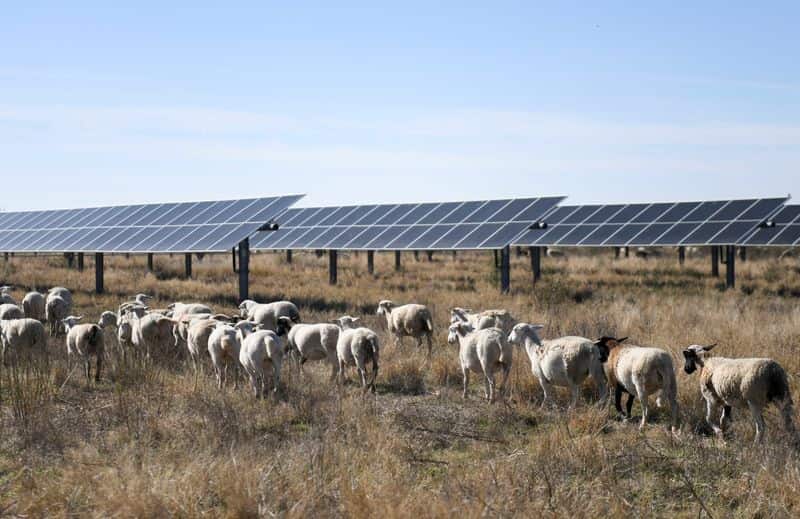
Key facts
- New rules for the Rural Energy for America Program (REAP) will make it harder for farmers to access funds for projects like solar arrays.
- Farmers must now complete a project and demonstrate one year of energy savings before applying for REAP funding.
- REAP has invested over $4.8 billion in renewable energy and energy efficiency projects between 2014 and 2025.
- Nearly 64% of REAP projects since 2017 were solar arrays.
- A USDA spokesperson stated the changes aim to fund actual project results, not just projections.
President Donald Trump's administration is implementing new regulations for the Department of Agriculture's Rural Energy for America Program (REAP) that will make it more difficult for farmers to access funds for renewable energy projects. The changes, set to take effect on October 16, require applicants to have already completed a project and demonstrated one year of energy savings, a significant shift from previous rules that allowed applications before breaking ground.
REAP has been a significant source of funding for farmers and small businesses, supporting over 19,000 energy projects, including solar installations and energy efficiency upgrades, with over $4.8 billion invested between 2014 and 2025. Farmers and energy analysts argue that the new requirements will disproportionately affect smaller operations, especially given current financial uncertainties and higher costs for fuel and fertilizer.
Richa Patel, a policy specialist at the National Sustainable Agriculture Coalition (NSAC), stated that the new rules are not feasible for many farmers who cannot afford to front the entire project cost. A USDA spokesperson defended the changes, saying they are intended to ensure the program funds actual results rather than projections. The administration had previously paused REAP applications this year and restricted eligibility for solar projects, with Agriculture Secretary Brooke Rollins citing concerns about prime farmland being used for solar arrays.
The program has historically enjoyed bipartisan support, with over two-thirds of REAP grants going to recipients in Republican-held congressional districts, according to a Brookings Institution analysis. Ann Mesnikoff of the Environmental Law & Policy Center noted the program's popularity, even leading to the creation of businesses dedicated to assisting farmers with applications. However, the program's stall and new rules have impacted these businesses, with one founder forced to lay off staff.