Key facts
- President Lee Jae Myung urged North Korea to restore trust and resume dialogue.
- South Korea's military and UN Command stated North Korea violated the armistice with a landmine blast.
- Three South Korean soldiers were wounded in the Demilitarized Zone landmine incident.
- Kim Yo Jong rejected the findings and warned of retaliation.
- South Korea plans to build nuclear-powered submarines by the mid-2030s.
- Missile defense capabilities will be upgraded with AI-based systems and laser interceptors.
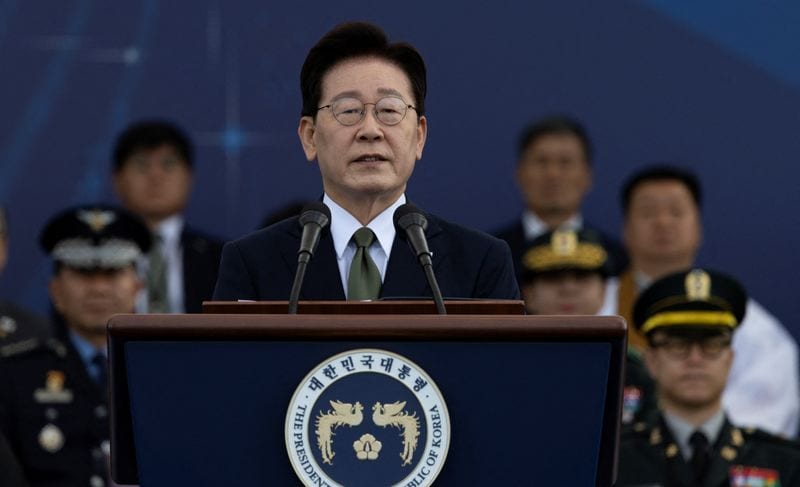
South Korean President Lee Jae Myung on Thursday called on North Korea to help restore trust and resume dialogue, a day after Seoul and Pyongyang traded barbs over a landmine incident in the Demilitarized Zone (DMZ). The incident, which wounded three South Korean soldiers, was deemed an armistice violation by South Korea's military and the UN Command.
"I hope that the North joins us now on the path of restoring trust and resuming dialogue, following a long interruption," Lee said in an address marking the country's Armed Forces Day. He added that his administration would "consistently pursue practical measures to reduce military tensions between the two Koreas."
Kim Yo Jong, the influential sister of North Korean leader Kim Jong Un, rejected the findings in a statement on Wednesday, accusing Seoul of fabricating the results and warning of retaliation. Unification Minister Chung Dong-young had previously stated that the response to the incident should not impede peace efforts and called for a thorough investigation.
Lee also reaffirmed his goal of securing the transfer of wartime operational control from the United States to South Korea as part of a push for self-reliant national defense. In a wide-ranging defense reform agenda, Lee announced plans for South Korea to build nuclear-powered submarines by the mid-2030s and upgrade missile defense capabilities, including AI-based command-and-control systems and high-energy laser interceptors. The modernization drive will also involve expanding AI capabilities, restructuring the military for future warfare, and strengthening the country's three-axis defense system for detecting and intercepting missile threats.