Key facts
- A 19th-century report of a train delay in Exeter due to a geomagnetic storm likely had its date wrong.
- The original report in Nature, published in 1871, cited October 1841 for the event.
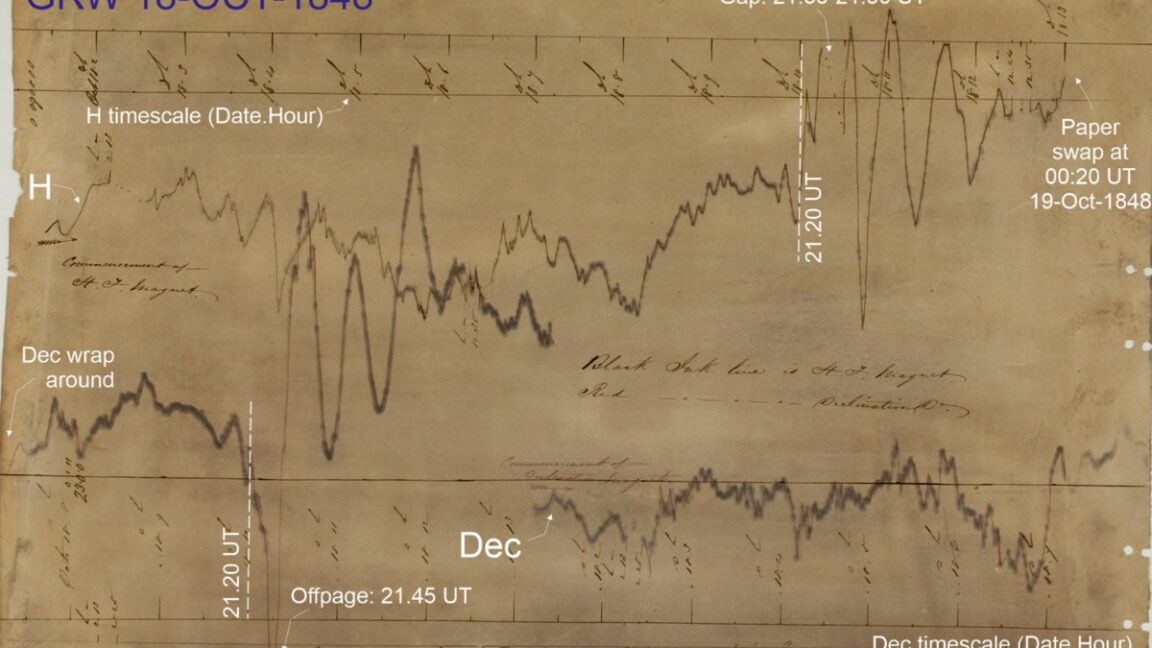
- New research suggests the disruption actually occurred around October 18, 1848.
- The Carrington Event of 1859 remains the most powerful geomagnetic storm on record.
- The earliest documented space weather impact on technology occurred in March 1847 on the Midland Railway.
Scientists have resolved a mystery surrounding the earliest documented instance of space weather impacting technology, suggesting a 19th-century report of a train delay in Exeter, England, was misdated. An anonymous account published in Nature in 1871 described a "very intense magnetic disturbance" that caused a 16-minute delay to an express train on October 18, 1841, due to telegraph system disruptions. However, new research published in the journal Space Weather indicates this date was likely a typographical error.
According to co-author Jim Wild of Lancaster University, the actual event probably occurred around October 18, 1848. This revised timeline is supported by historical railway timetables, which show the relevant express train operating between March 1848 and July 1849, and by evidence of strong geomagnetic activity on that later date, including contemporary newspaper accounts and sunspot observations by astronomer Temple Chevallier. The original 1841 date is problematic as the railway line in question was not approved by Parliament until July 1844 and did not open until May 1846.
The anonymous 1871 Nature report is believed to have been written by Nathaniel John Holmes, an electrical engineer, who may have had a relationship with Nature editor Sir Norman Lockyer. While Holmes's interest in solar activity is noted, the original source material for his account could not be located.
The Carrington Event of 1859 remains the most powerful geomagnetic storm recorded, causing widespread disruption to telegraph systems. However, the Exeter incident, even with its corrected date, highlights that society has been experiencing the effects of space weather on emerging technologies for nearly as long as those technologies have existed. The earliest confirmed incident of space weather affecting technology is now considered to be a March 1847 event that disrupted telegraph systems on the Midland Railway.