Key facts
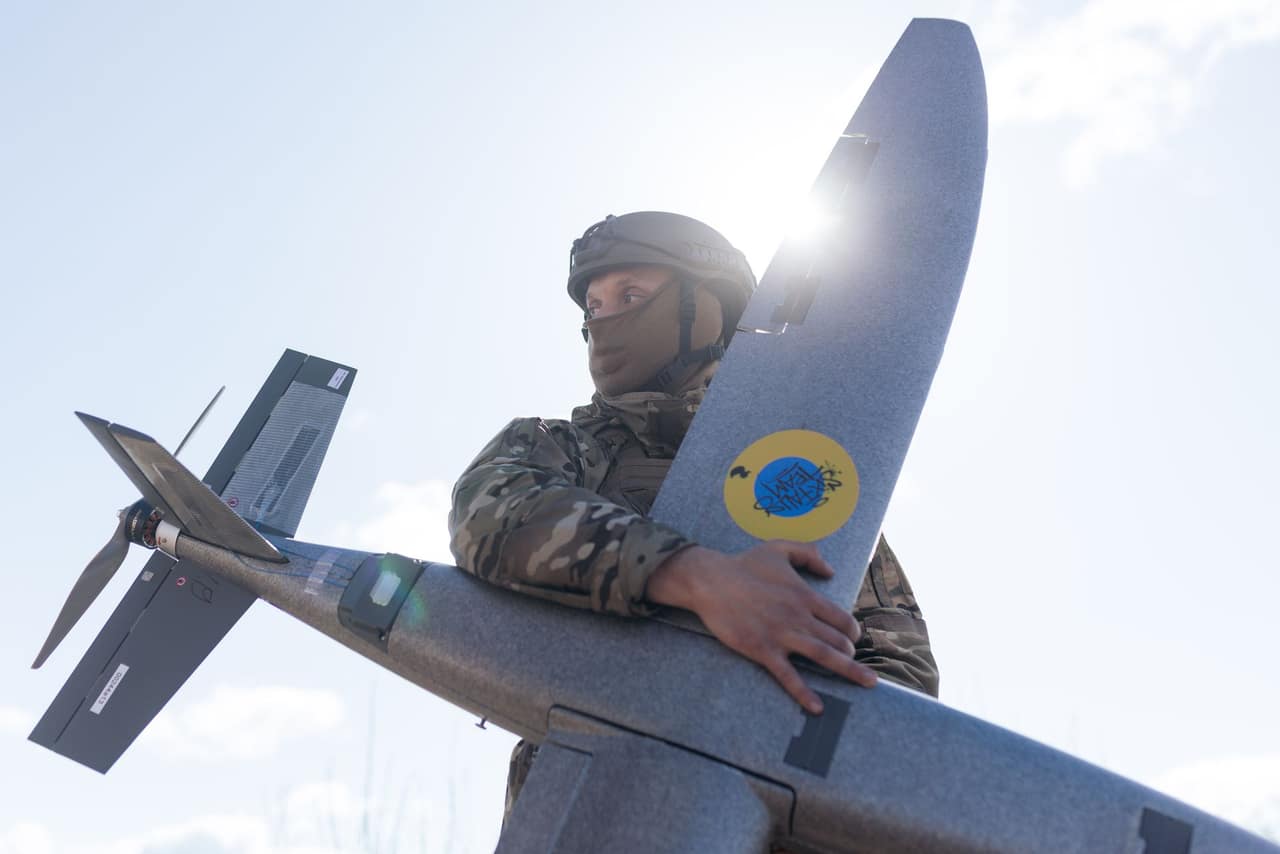
- Ukraine's defense industry, once a large Soviet complex, is now dominated by over 1,000 companies, with private business accounting for 90% of drone production.
- The sector's output reached $13.1 billion in 2025, a 31% increase from the prior year.
- Ukraine has established a transparent export mechanism that prioritizes supplying its own army.
- 156 international defense partnerships have been launched, with 156 companies involved.
- Ukraine is specializing in unmanned systems, electronic warfare, and combat data, leveraging years of front-line experience.
Ukraine is actively rebuilding its defense industry, transforming it from a state-controlled Soviet-era behemoth into a dynamic, privately funded sector. This resurgence is driven by over 1,000 companies, with private businesses now accounting for up to 90% of drone production. In 2025, the industry's output reached $13.1 billion, marking a 31% increase from the previous year, with the state estimating the sector's full capacity to be in the tens of billions of dollars.
The country is navigating critical choices that will shape its future industrial landscape. One key decision involves 'spillover' versus 'closed loop' development, determining whether military technologies and expertise will integrate into the civilian economy, similar to models in the US and Israel, or remain isolated. Ukraine's advancements in autonomy, communications, robotics, and electronic warfare show potential for civilian applications in agriculture and space, but require supportive intellectual property rules and education.
Another fork in the road is 'autarky versus openness.' Unlike Japan, which historically limited its defense industry to domestic needs, leading to its decline, Ukraine is moving towards openness. A new export mechanism, formalized in early July, allows controlled exports only after domestic army needs are met. This shift aims to provide the scale necessary for competitiveness, mirroring the strategies of South Korea and Turkey. International revenue is also being sought through joint ventures, with 156 such partnerships already launched, though a quarter have stalled. The success of these ventures depends on building robust service, standards, and financial instruments.
Ukraine is also embracing competition over consolidation. Instead of the US model of merging defense contractors, Ukraine is fostering open procurement cycles where hundreds of manufacturers compete for contracts, driving innovation. The market is expected to consolidate naturally over time. Finally, the country is choosing specialization, moving away from trying to build everything. Ukraine is focusing on its clear advantages: unmanned systems across all domains, electronic warfare, and combat data, which are highly valued by international partners due to years of costly front-line experience.