Key facts
- U.S. Secretary of State Marco Rubio stated Iran cannot charge tolls on the Strait of Hormuz.
President Donald Trump stated Iran has informed the U.S. that no tolls will be sought from ships transiting the Strait of Hormuz, warning that negotiations would end immediately if this information is false. U.S. Secretary of State Marco Rubio is touring Gulf nations to address concerns over a preliminary deal.
The Strait of Hormuz is a critical chokepoint for global energy supplies, and any dispute over tolls or passage rights could significantly impact oil prices and international trade, while also raising geopolitical tensions in the Middle East.
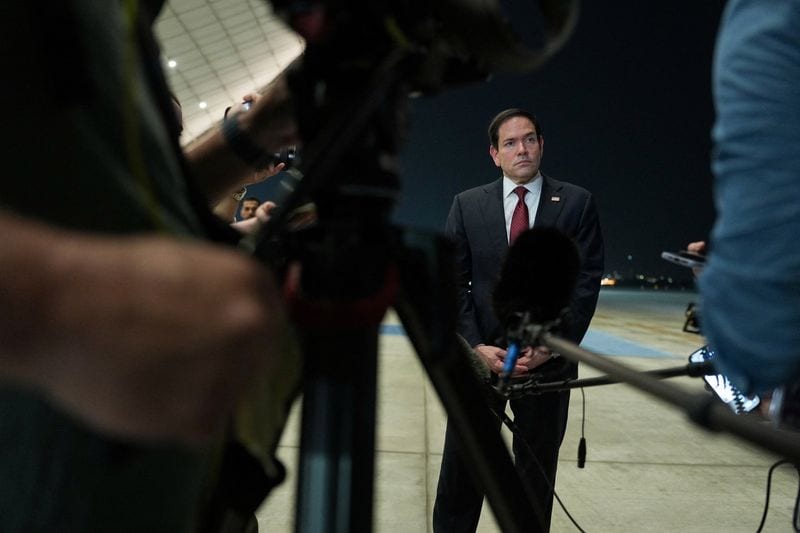
U.S. Secretary of State Marco Rubio began a Middle East tour aiming to reassure Gulf allies concerned about concessions in President Donald Trump's preliminary Iran deal. Rubio stated that Iran cannot charge tolls on the Strait of Hormuz, emphasizing it is an international waterway governed by international law. This comes amid a tentative agreement for 60 days of safe passage through the strait without charge. Gulf nations are particularly worried that a proposed $300 billion reconstruction fund for Iran could be used for military purposes and that the deal does not address Tehran's ballistic missile capabilities. Separately, the UN is set to evacuate 11,000 sailors stranded in the Gulf, as Iran disputes details of a related Memorandum of Understanding concerning its nuclear program. Rubio's visit also addresses issues not covered by the MoU, including concerns raised by allies regarding the accord's terms. President Donald Trump stated Iran has told the U.S. that no tolls were being sought from ships traveling through the Strait of Hormuz, warning that negotiations would end immediately if this information is false.
Pick the topics you care about. Get only what matters, on your cadence.