Key facts
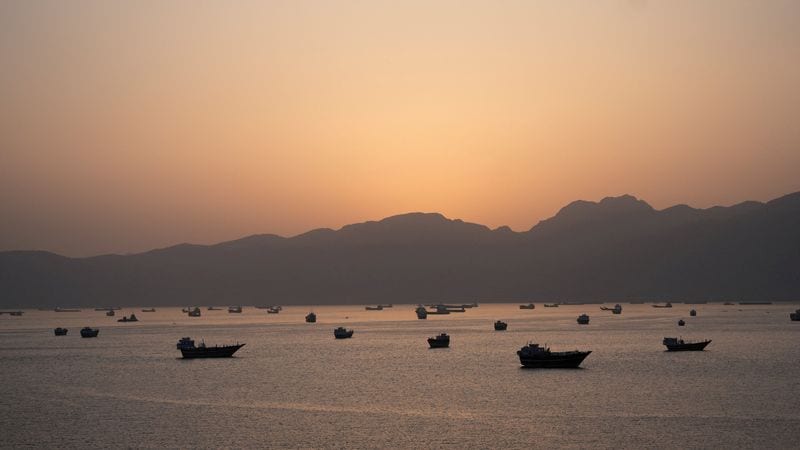
- The UN's International Maritime Organization (IMO) is coordinating an evacuation plan for over 11,000 seafarers stranded on 500-600 ships in the Strait of Hormuz.
- The operation follows a peace agreement between the United States and Iran that reopened the vital maritime route.
- Oman has coordinated with the IMO to provide a temporary maritime corridor for vessels transiting the Strait of Hormuz.
- Approximately 20,000 seafarers remain stranded on approximately 3,200 vessels west of the Strait of Hormuz.
- Oman will keep the Strait of Hormuz open to shipping without imposing tolls on vessels.
The United Nations' International Maritime Organization (IMO) has initiated an evacuation plan for approximately 11,000 seafarers stranded on 500-600 ships in the Strait of Hormuz. This large-scale operation will be conducted in close cooperation with Iran, Oman, other coastal states, the United States, and industry stakeholders, according to IMO Secretary-General Arsenio Dominguez.
The initiative follows a peace agreement between the United States and Iran that ended months of conflict and allowed commercial shipping to resume through one of the world's most important maritime routes. The IMO has secured the necessary safety guarantees and verified conditions for safe navigation to support these operations. The agency stated it has begun contacting ships to start the evacuation.
Oman announced on Tuesday that it had coordinated with the IMO to provide a temporary maritime corridor for vessels seeking to transit through the Strait of Hormuz, according to Oman's state news agency. Vessels wishing to pass through would need to coordinate with the IMO and Omani authorities.
According to the UN body, around 20,000 seafarers remain stranded on approximately 3,200 vessels west of the Strait of Hormuz. Incidents in the region have resulted in at least eight seafarer or dock worker deaths since the conflict began. The IMO council has strongly condemned threats and attacks against vessels by Iran, demanding Tehran cease such actions. A plan for a safe evacuation framework was tabled by Bahrain, Japan, Mexico, Panama, Singapore, and the UAE, and has garnered support from the US.
Shipping traffic has increased since the US-Iran agreement came into force. Data from shipping analytics platform Kpler indicates at least 36 commodity vessels passed through the Strait of Hormuz on Monday, the highest level of traffic since the war began.