Key facts
- Poland deployed extra police in Warsaw from outside the capital and declined to give numbers.
- Organizers said they expected a record turnout, including Spain's Revuelta and Hungary's Mi Hazánk.
- Prime Minister Donald Tusk appealed for restraint, calling independence and freedom a common good.
- Organizers' spokesperson Rafal Buca said they condemned political attacks linked to the Krakow tragedy.
- Ministers angered nationalists by saying the Krakow shooter may have been motivated by far-right ideology.
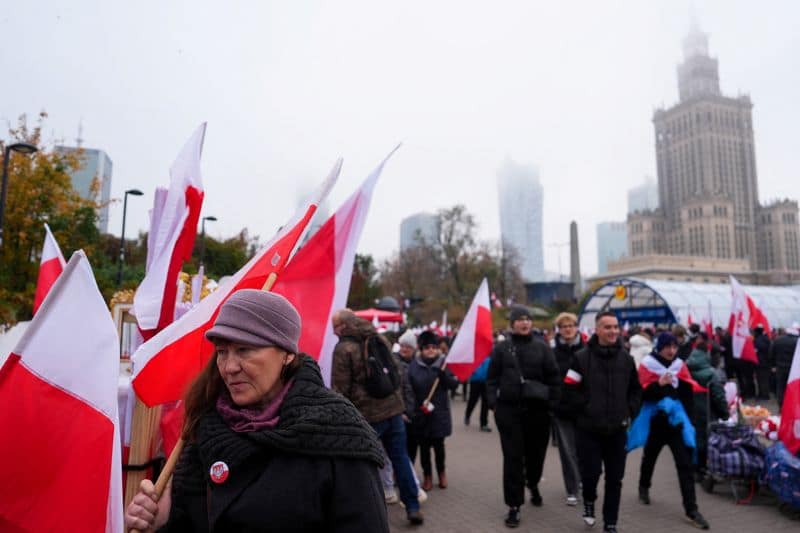
Poland sent additional police into Warsaw and put concrete barriers on streets near the downtown starting point of an annual far-right march on November 11, as thousands of supporters gathered in a central square under cloudy skies, many carrying large Polish flags.
The Independence Day march has long caused friction between right-wing parties and the centrists who now govern, who say it is a platform for racism and antisemitism. Participants deny that, saying the gathering, held under the motto "A Pole is the host in Poland," expresses national pride.
Organizers said they expected a record turnout, with foreign nationalists attending, including Spain's Revuelta, a youth movement linked to Vox, and members of the Hungarian far-right Mi Hazánk party. They urged people not to use the march for political ends. "We have condemned political attacks linked to this tragedy, regardless of whether they came from the right or the left," said Rafal Buca, a spokesperson for the march organizers.
The march took place amid sharper-than-usual political divisions after ministers angered nationalists by saying the man who killed six people in the main square of Krakow may have been motivated by far-right ideology. Prime Minister Donald Tusk appealed for restraint in Szczecin, in northwestern Poland. "Anyone who truly cares about Poland must understand that this space, defined by independence, freedom, and a secure Republic, is a common good," he said.
Police said they had brought in officers from outside the capital and declined to give numbers. Officers searched areas near the route. Authorities have in the past tried to stop the march after clashes between some participants and their political opponents or police.