Key facts
- UGT and CCOO put early strike participation at 90% at ports and in the automotive sector.
- The unions reported total stoppages at factories including Volkswagen's in Navarre and SEAT's in Barcelona.
- Union figures put participation at 85% in the meat industry, 82% in waste collection and 75% in the energy sector.
- CCOO's Madrid branch said police fired pepper spray at pickets at Mercamadrid, with 13 people requiring medical attention.
- A police spokesperson confirmed one arrest but not the pepper spray at Mercamadrid, saying it was used at a separate picket in Carabanchel.
- Spain's central bank estimates a deficit of about 750,000 homes, set to exceed a million by 2028.
Spanish workers went on a general strike on November 11, 2026, setting up picket lines in stormy weather to protest housing costs a few weeks before a snap general election. It is the first general strike in 14 years jointly backed by Spain's two largest unions, UGT and CCOO, alongside other labor organizations and tenants' associations angry about rising rents and evictions.
"We won't stop until we transform this country's housing model from top to bottom so that houses are for living instead of being at the service of the rentier minority," said Alicia del Rio, spokesperson for the Madrid Tenants' Union, as the strike began at midnight.
Spain has a deficit of about 750,000 homes, which the central bank expects to grow to more than a million by 2028. The average rental price of 1,176 euros ($1,315) equals about 98.7% of a young person's average monthly salary in Spain, according to the Youth Council of Spain.
According to UGT and CCOO, early participation reached 90% at ports and in the automotive sector, with total stoppages reported at factories including Volkswagen's in Navarre and SEAT's in Barcelona. The unions put early turnout at 85% in the meat industry, 82% in waste collection and 75% in the energy sector, and said participation was lower in healthcare and social services at 38% and at 35% in the postal service.
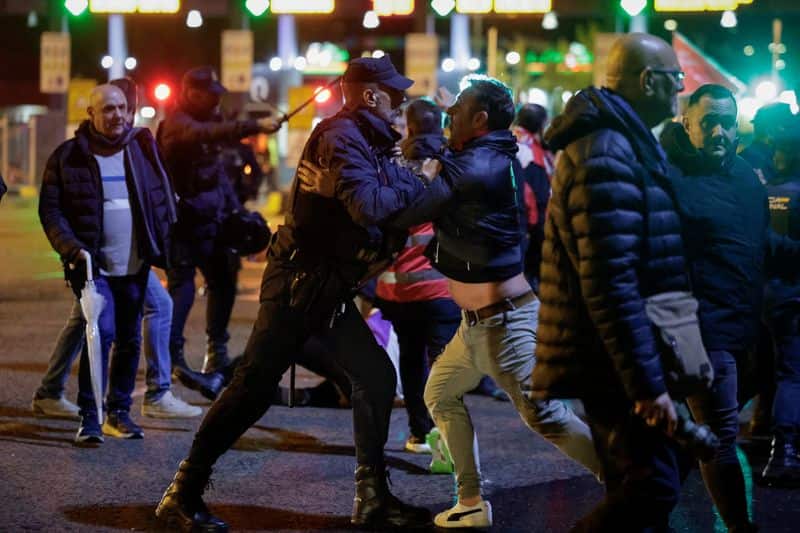
Tensions flared at the start of the strike at Madrid's Mercamadrid wholesale market, where about 1,000 protesters gathered. CCOO's Madrid branch said on X that police fired pepper spray at pickets and arrested one of them, with 13 people requiring medical attention. A police spokesperson confirmed the arrest but not the use of pepper spray, although he said it was used to disperse a separate picket line in the Carabanchel district.
The strike follows weeks of demonstrations and encampments provoked by the eviction and subsequent death of an 87-year-old woman in Madrid. Those protests, along with parliament's rejection last month of government decrees aimed at curbing evictions and limiting rent pressures, prompted Prime Minister Pedro Sanchez to call an election for November 29.
The government has largely blamed the right-wing opposition running many regions and municipalities for rising rents and insufficient housing supply. Sanchez, whose Socialist Party lags in opinion polls, hopes to harness voter resentment over housing and shift the political narrative away from a series of corruption cases involving his inner circle and a deadly train crash last month. Union leaders and many protesters have said they also hold the central government responsible for the housing crisis, as well as for Spain's second fatal train crash this year.
On November 10, train drivers walked out to demand more investment in maintenance and safety, causing widespread travel disruption. Plans for mass protest marches in the afternoon were threatened by two storms, named Charles and Bruna, that led weather agency AEMET to issue alerts for 14 regions over strong winds, rough seas and heavy rains.