Key facts
- The CGT union said 1.6 million people joined nationwide marches, including 350,000 in Paris.
- The Interior Ministry estimated about 600,000 people took part nationwide.
- Interior Minister Laurent Nuñez said 70,000 police officers and gendarmes were deployed.
- The Interior Ministry said at least 448 people were arrested, while one report cited 1,314 arrests.
- Rail services were disrupted, with some Paris services running at a third or half of usual frequency.
- The Ministry of National Education said around 17 percent of primary school teachers would be on strike.
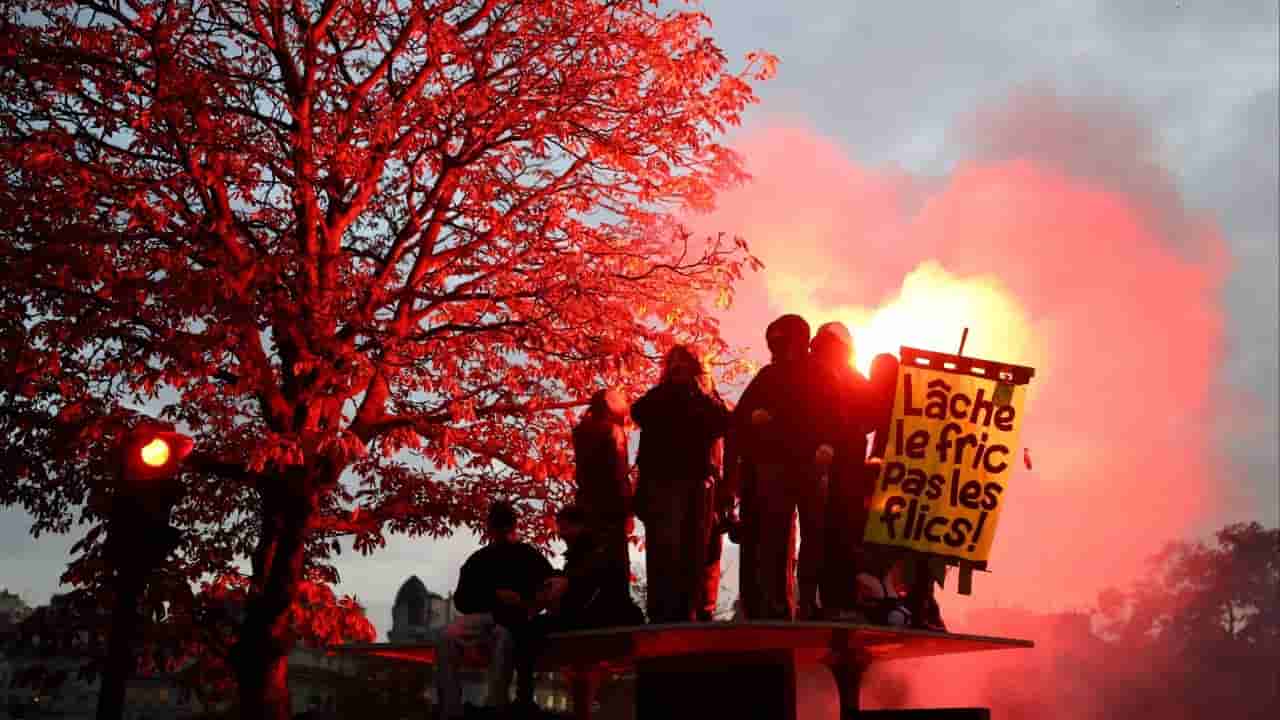
Hundreds of thousands of workers, students and pensioners joined strikes and marches across France on November 5, 2026, demanding higher wages and action on the cost of living, according to reports from Reuters, RFI and the Associated Press. The CGT union put nationwide turnout at 1.6 million people, including 350,000 in Paris, while the Interior Ministry estimated about 600,000 nationwide.
Police deployed 70,000 officers and gendarmes, backed by armored vehicles, drones and helicopters, Interior Minister Laurent Nuñez said. Clashes broke out in several cities, including Lyon, where police counted 30,000 demonstrators and unions put the figure at 55,000. Authorities reported tensions in Toulouse, Rennes, Pau, Orléans and Nantes. Near Toulouse, a high school was evacuated after a fire broke out.
The Interior Ministry said at least 448 people were arrested, while one report cited 1,314 arrests after the protests. Most demonstrations proceeded without major incidents, the ministry said.
Rail services were disrupted, particularly on regional and suburban lines, with some Paris services running at a third or half of usual frequency. The Ministry of Public Action and Public Accounts said nearly 10 percent of central government employees joined the strike, along with 4.6 percent of local government workers and 3.93 percent of public hospital staff. The Ministry of National Education said around 17 percent of primary school teachers would be on strike.
The protests began with high school and university students angry over school conditions and resources and grew into a nationwide movement. The CGT's Sophie Binet told France 2 television that unions wanted "wage increases everywhere" and a revision of the government's draft budget. The action comes six months ahead of elections to replace President Emmanuel Macron, with the far-right leading in opinion polls, as the euro zone's second-largest economy struggles with its finances.