Key facts
- Unions including the left-wing CGT called the nationwide mobilisation, with protests planned in 260 towns and cities, CGT head Sophie Binet said.
- The domestic intelligence service expected between 500,000 and 700,000 people to join demonstrations outside Paris.
- The Education Ministry said it expected 17.5% of public primary school teachers to strike.
- The strike contributed to a 2.4 gigawatt reduction in France's nuclear output early on Thursday, November 5.
- The main protest in Paris was scheduled to start from Place de la Republique at 2 p.m. (1300 GMT).
- High school students and other demonstrators faced off against riot police in Paris on Thursday morning, blocking a street with rubbish bins.
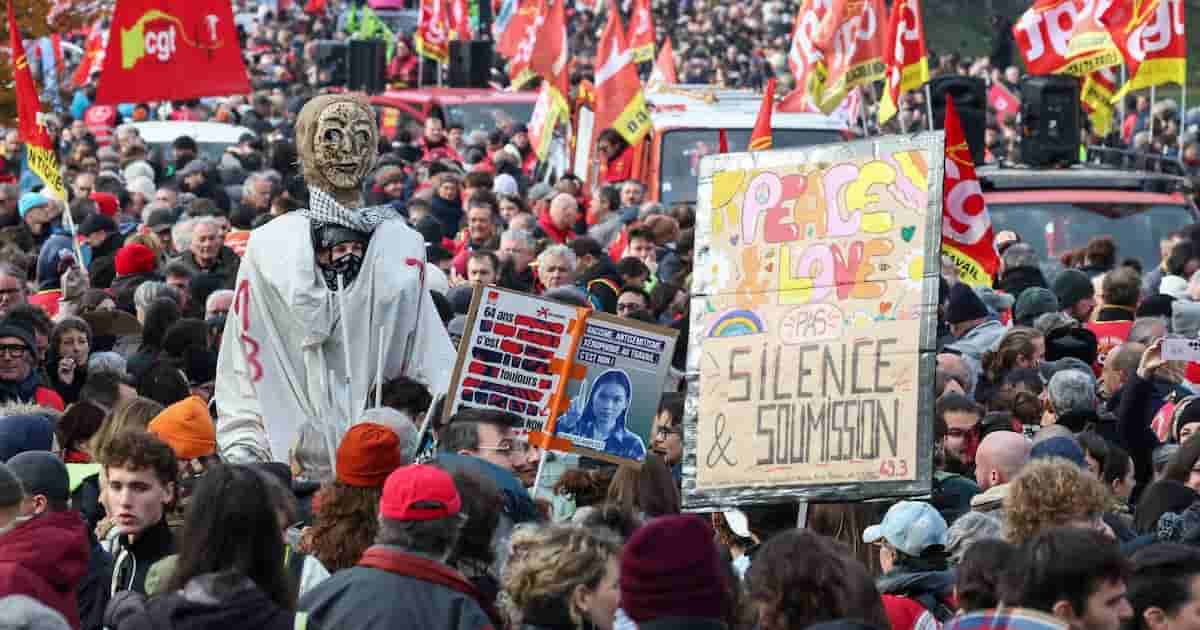
Flag-waving protesters marched through French cities and public workers went on strike on Thursday, November 5, 2026, in a renewed challenge to President Emmanuel Macron after weeks of unrest that have rattled his government five months before a presidential election.
The mobilisation, called by trade unions including the left-wing CGT and backed by student groups, follows demonstrations over living costs, public services and education that triggered the worst civil unrest France has seen in years. "We need to turn up in big numbers on the streets today," CGT head Sophie Binet told LCI TV, saying protests were planned in 260 towns and cities across France.
French high school students and other demonstrators faced off against riot police in Paris as they blocked a street with rubbish bins on Thursday morning. Demonstrations began in the southern cities of Marseille and Lyon and in Nantes in the west in mid-morning. The main protest in Paris was scheduled to start from Place de la Republique at 2 p.m. (1300 GMT).
Authorities have sought to lower tensions after riots and looting on October 17 caught security forces off guard, leaving damaged shops and public buildings across the country and fuelling criticism of Macron's handling of the crisis. French authorities will deploy around 70,000 police nationwide. The domestic intelligence service expects between 500,000 and 700,000 people to join demonstrations outside Paris.
The strike had already contributed to a reduction in France's nuclear output early on Thursday. However, no major problems were reported on the transport network. The Education Ministry said it expected 17.5% of public primary school teachers to strike. The train operator SNCF expects disruption on local and regional lines and some disturbances to high-speed traffic, while most of the Paris metro system is expected to run. Dockworkers have also called a strike.
Macron convened a defence and security meeting on Wednesday ahead of the protests, underlining how a movement that began with student anger over deteriorating school conditions and concerns about opportunities for young people has evolved into a broader challenge to his government. "The demands of the high school and students' movement should not depend on the adoption of the budget bill," Eric Coquerel, the leader of the National Assembly's finance committee and a member of Jean-Luc Melenchon's far-left party, posted on X. "The government can respond by swiftly opening additional credits" during parliamentary discussions aimed at fine-tuning budget needs for this year.
Far-right candidate Marine Le Pen has emphasised the law-and-order component of her programme, while Melenchon has focused on social issues and police violence. Macron has largely blamed surging energy prices, social media and the "ultra-left" for fuelling violence.