Key facts
- Overseas Korean independence sites in northeastern China, including burial grounds and birthplaces of activists, are in a state of neglect.
- A tour group of South Korean students encountered difficulties accessing these sites due to overgrown paths and lack of signage.
- Historians and professors are calling for increased government budget and public interest to preserve these historical locations.
- The veterans ministry plans to survey 1,032 overseas historical sites by 2028 to assess their condition and preservation needs.
- The ministry intends to consult with local governments to preserve sites and install markers.
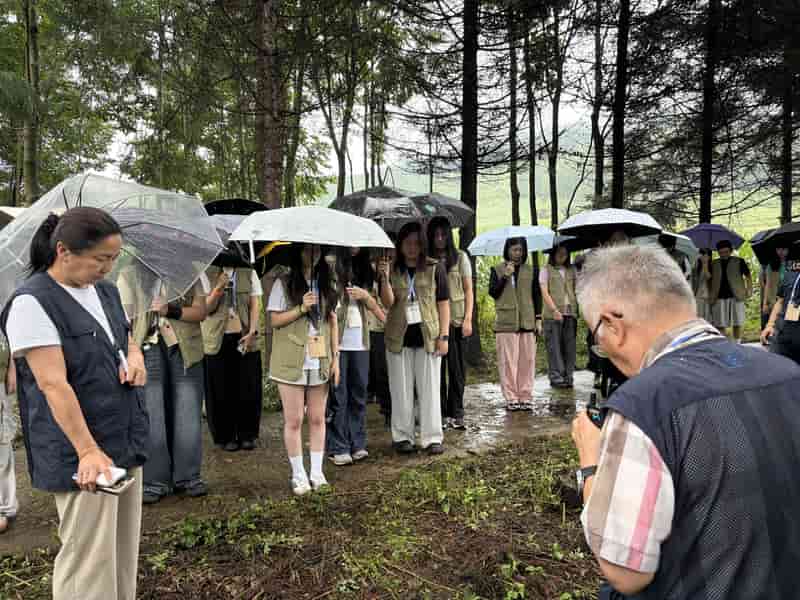
A tour group of South Korean high school students recently visited overseas historic sites in northeastern China, highlighting the neglected state of many locations crucial to Korea's independence movement against Japanese colonial rule. The students, on a program organized by the veterans ministry, found themselves unable to reach the burial site of seven Korean independence fighters due to overgrown paths and dense vegetation, forcing them to pay respects from a distance.
Historian Park Hwan, who led the tour, explained that the site commemorates teachers and a principal from an ethnic Korean school who were killed by Japanese authorities in 1920 during the Gando massacre. The school itself was funded by graduates of the Shinheung Military Academy, a key training facility for independence activists. The tombstones, erected in 1996, were difficult to access, underscoring the poor maintenance of such sites.
The students also visited the birthplace of Song Mong-gyu, a cousin of the renowned poet Yoon Dong-ju and an independence activist in his own right. Song, who dedicated his life to preserving Korean culture through literature and education, was arrested by Japanese police and died in prison in 1945. Despite his contributions and posthumous recognition, his birthplace lacked any marker, appearing as a simple, unassuming house.
Experts and professors involved in the tour expressed concern over the inadequate management and preservation of these overseas historical sites. Professor Seo Kyoung-duk of Sungshin Women's University stressed the importance of public interest and sufficient budget allocation for these sites. Professor Hwang Min-ho of Soongsil University further emphasized the need for increased funding for the Independence Hall of Korea, which is responsible for inspecting these sites, and suggested forming a dedicated department within the veterans ministry for their management.
In response to these concerns, the veterans ministry announced plans to conduct an on-site survey of all 1,032 overseas historical sites related to Korea's independence movement by 2028. The survey will cover sites in China and Japan this year, followed by inspections in 2027 and 2028. Based on the survey findings, the ministry aims to preserve the original form of these sites and install markers and alternative facilities in consultation with local and municipal governments.