Key facts
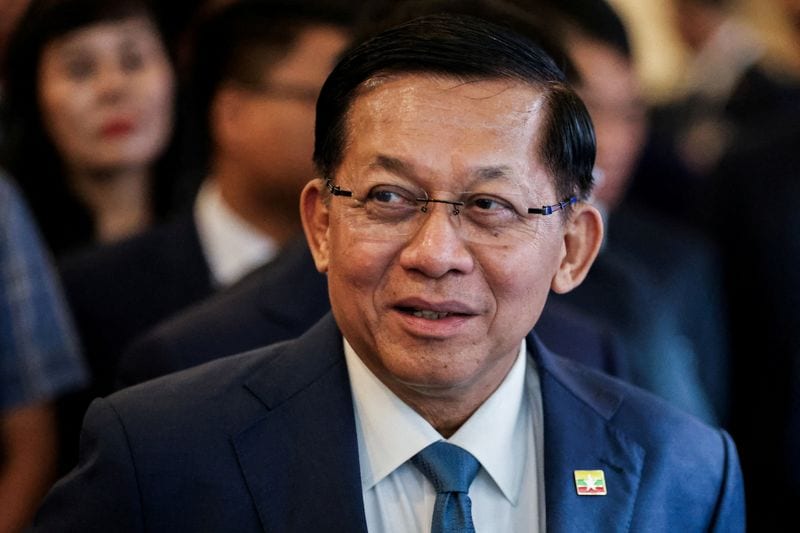
- Myanmar junta chief Min Aung Hlaing is visiting Malaysia for a two-day meeting with Prime Minister Anwar Ibrahim.
- The visit aims to discuss the voluntary, dignified, and safe repatriation of Myanmar nationals from Malaysia.
- Malaysia has deported approximately 10,000 Myanmar nationals since January.
- The UN and rights groups have raised concerns that returnees may face danger amid Myanmar's civil war.
- Myanmar's military has conducted deadly airstrikes in Rakhine state, killing at least 58 people recently.
Myanmar's junta chief and president, Min Aung Hlaing, is scheduled to visit Malaysia for talks with Prime Minister Anwar Ibrahim, seeking international legitimacy amid regional re-engagement.
The visit, commencing Wednesday, is set to focus on bilateral issues including the repatriation of Myanmar nationals from Malaysia. The Malaysian government stated the visit offers an opportunity for continued direct engagement with Myanmar, specifically concerning the "voluntary, dignified and safe repatriation of Myanmar nationals of all ethnic groups who have been in Malaysia illegally."
Myanmar has been in a state of turmoil since Min Aung Hlaing led a military coup in 2021, which ignited a civil war that has resulted in an estimated 100,000 deaths and displaced over 3.5 million people. The military-backed leader, subject to Western sanctions, assumed a civilian role following a controversial election, a transition that has seen some countries in the region rebuild ties with Naypyitaw.
Despite being excluded from Association of Southeast Asian Nations (ASEAN) summits since 2021 due to non-compliance with a peace roadmap, individual ASEAN nations have been re-establishing connections. Min Aung Hlaing has previously visited Thailand, Laos, Cambodia, Vietnam, China, India, Russia, and Belarus since becoming president in April.
Domestically, Malaysia faces pressure regarding undocumented migrants and refugees, particularly Rohingya Muslims. Prime Minister Anwar Ibrahim indicated he would invite Min Aung Hlaing if Myanmar agreed to accept the return of Rohingya refugees. Richard Horsey of the International Crisis Group noted that Anwar needs Myanmar's cooperation for refugee returns, suggesting the visit is a price for that cooperation, which Min Aung Hlaing will likely present as official recognition.
Malaysia has deported approximately 10,000 Myanmar nationals since January, with assurances from Myanmar authorities that returnees would not face harm. However, the UN and rights groups have expressed concerns about the safety of those repatriated, citing the ongoing violence and risks such as forced conscription. According to UN data, about 193,000 registered refugees and asylum seekers from Myanmar are in Malaysia, which is not a signatory to the UN refugee convention.
Meanwhile, the civil war in Myanmar continues, with the military recently carrying out airstrikes in Rakhine state that killed at least 58 people, drawing condemnation from UN Secretary-General António Guterres and concern from ASEAN chair the Philippines. Horsey commented that current regional responses do not indicate diplomatic costs for Myanmar's actions, including Min Aung Hlaing's visit to Kuala Lumpur.