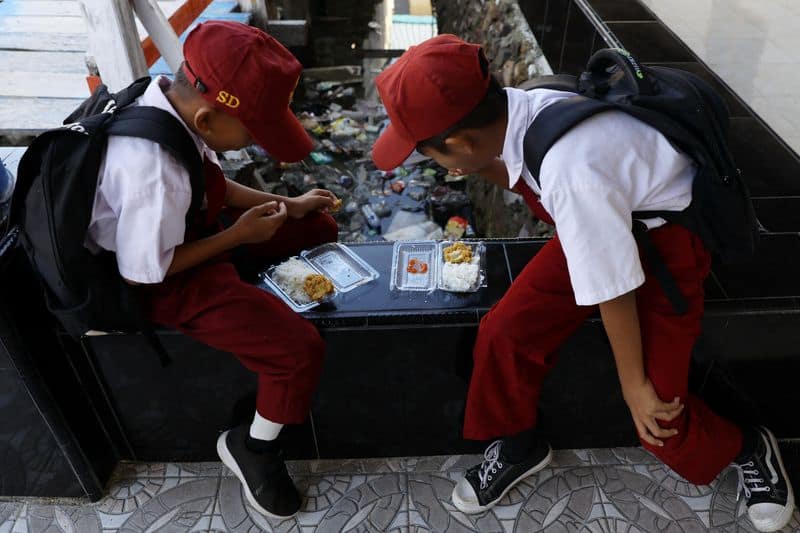
Indonesia's free-meal program will open 480 kitchens in October, with most located in remote areas to combat under-nutrition. The initiative, a key promise of President Prabowo Subianto, has faced challenges including corruption allegations and delayed payments to operators.

The expansion of Indonesia's free-meal program aims to address critical under-nutrition issues, particularly in remote regions. However, the program's significant budget, coupled with past issues of corruption allegations and delayed payments to operators, raises questions about its long-term sustainability and effectiveness.
JAKARTA, Sept 30 (Reuters) - Indonesia's free-meals programme is set to launch 480 new kitchens in October, with a majority designated for remote and disadvantaged areas, particularly in eastern Indonesia like Papua, according to Sudaryono, the head of the National Nutrition Agency. This initiative is a signature campaign promise of President Prabowo Subianto, aimed at feeding 83 million school children and expectant mothers to combat under-nutrition.
Of the 480 kitchens, 269 will be situated in 16 provinces in eastern Indonesia, regions identified with high rates of stunting, including Gorontalo, Maluku, and several provinces on Papua island. The remaining 211 kitchens will be established in other areas.
The program has been troubled by allegations of corruption, over 50,000 cases of food poisoning, and closures of privately operated kitchens. Concerns also persist that its substantial cost could widen the budget deficit. The National Nutrition Agency stated it would prioritize recipients in remote areas following a budget cut for this year to 229 trillion rupiah ($12.8 billion) from an initial 335 trillion rupiah. The budget for next year is projected at 240 trillion rupiah.
Sudaryono indicated that the kitchens would become active from Friday, with staff training and meal provision ramping up throughout October. Owners of these kitchens are expected to begin receiving government payments once activated, though specific details of the payment scheme remain unclear. Reuters has previously reported that many investors who had already set up kitchens in remote areas faced delayed payments due to budget efficiency measures, leaving some facilities idle for months.
Pick the topics you care about. Get only what matters, on your cadence.