Key facts
- Around 1.1 million Indonesian university graduates are unemployed.
- Indonesia's GDP grew 5.29% in the second quarter of 2026.
- The share of middle-class income earners fell to 7.1% in 2025 from 14.5% in 2018.
- Government consumption grew 15.97% in Q2 2026, outpacing household consumption.
- The benchmark interest rate was raised to 5.75% to support the currency.
- Employers report difficulty filling roles requiring engineering, data, and applied technical skills.
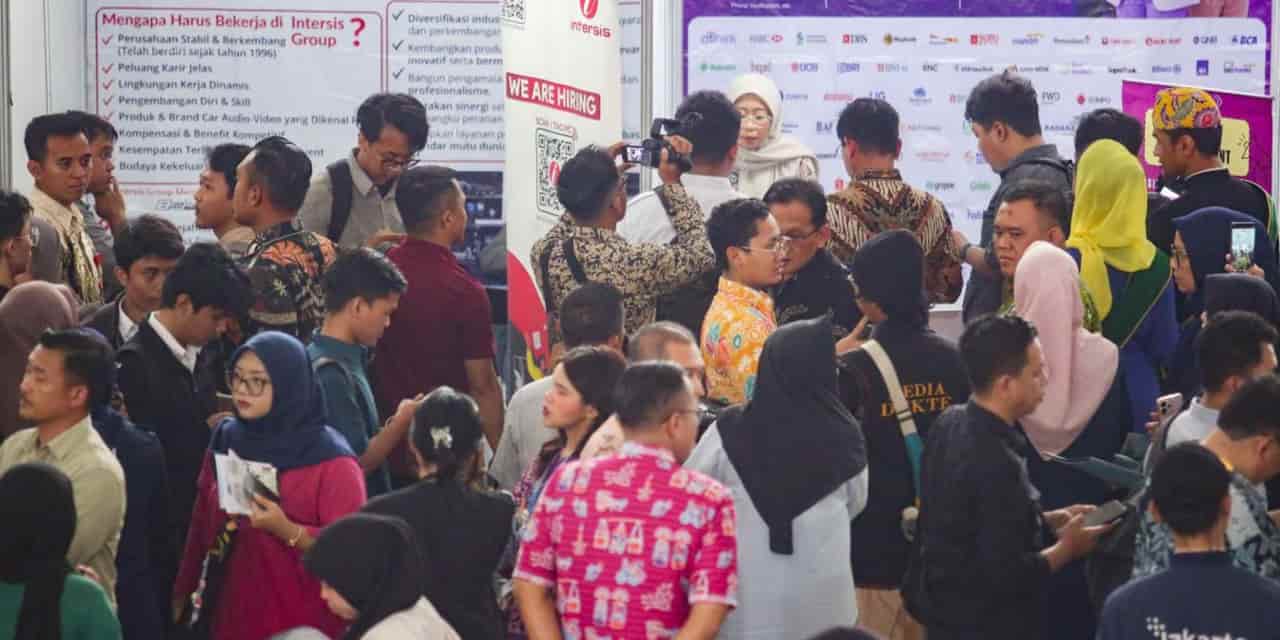
Indonesia is grappling with a significant unemployment crisis among its university graduates, with approximately one million holding degrees but unable to find work, despite the country's reported economic growth. This situation, highlighted by data showing a sharp decline in middle-class income earners, points to a critical mismatch between the skills supplied by the education system and the demands of the labor market.
While Indonesia's GDP grew 5.29% in the second quarter of 2026 and first-half growth reached 5.45%, this expansion is not translating into sufficient graduate-level employment. The government's focus on fiscal spending, particularly in infrastructure and commodity processing, creates jobs but not the white-collar roles sought by a large number of graduates in fields like management and communications. Employers, meanwhile, report a shortage of workers with engineering, data, and applied technical skills.
Fauzan, the Deputy Minister of Higher Education, Science, and Technology, has stated that universities are failing to produce graduates with sufficient competence for real-world challenges, describing them as "ready to be trained" rather than "ready to work." He advocates for the establishment of Centres of Excellence, developed in partnership with industry, to ensure graduates are immediately employable.
Economists like Teuku Riefky from the University of Indonesia's Institute for Economic and Social Research have raised concerns that the expansion of state investment vehicles could crowd out private sector investment. This, coupled with a currency that has depreciated over 7% against the dollar this year and a benchmark interest rate hike to 5.75% to defend it, creates tight conditions for private hiring that could absorb graduates.
President Prabowo Subianto has previously stated that unemployment and poverty are at historic lows, a characterization disputed by economists who point to technical discrepancies in how unemployment is measured and the absolute numbers of unemployed individuals.