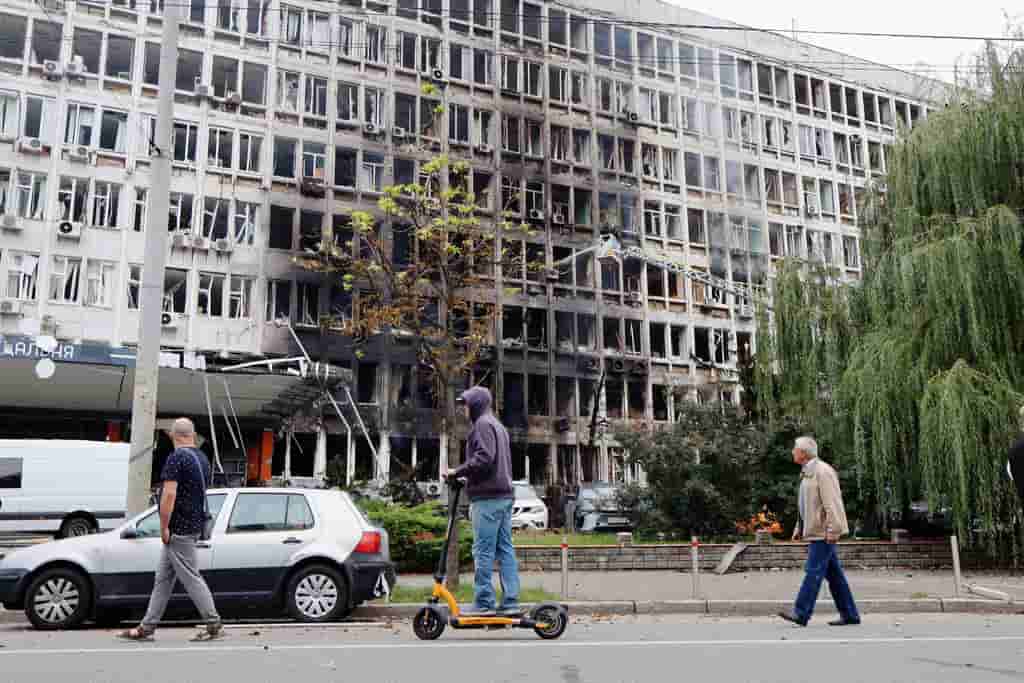
The nature of daily life in Kyiv has fundamentally shifted due to Russia's persistent drone and missile attacks, which have become a constant backdrop to everyday routines. Since August, the frequency and nature of these assaults have changed, with the introduction of faster, jet-powered Shahed drones that are more difficult to intercept and can strike at any time of day. This has blurred the lines between normal office hours and periods of danger, forcing residents to adapt to a state of constant vigilance.
On Wednesday, September 23, 2026, the reporter experienced this new reality firsthand. An early morning explosion near her home was followed by reports of strikes across the city. Despite ongoing air raid alerts, a coffee shop near the central railway station was unexpectedly crowded, with patrons seemingly seeking a semblance of normalcy or taking shelter while grabbing takeout. The sounds of air defense fire mingled with the rumble of attacks, highlighting how such events have become unremarkable for many.
Later that day, the reporter was assigned to cover the aftermath of a strike that hit a historic market near the central railway station. The attack resulted in two fatalities and at least 45 injuries, damaging railway infrastructure, business centers, and residential buildings. While reporting from the scene, another air-raid alert sounded, forcing a temporary halt to activities and a move to shelter. The emotional toll of these repeated events, even when not directly impacting one's immediate surroundings, leads to a profound exhaustion that can set in after the immediate danger has passed.