All NewsEducationTV
Equities & FundsCrypto & Digital AssetsAI & TechnologyBusiness & CorporateUS Politics & PolicyGeopolitics & Global RiskMacro, Rates & FXCommodities & EnergyEuropean Politics & MarketsAsia-PacificReal Estate & Property
All NewsHome
← Back to AI & Technology

Japan Coast Guard trials automated boat for gas leak detection

Created at 24 Aug · 5:31 PM1 source↑ Market-relevant
IN SHORT

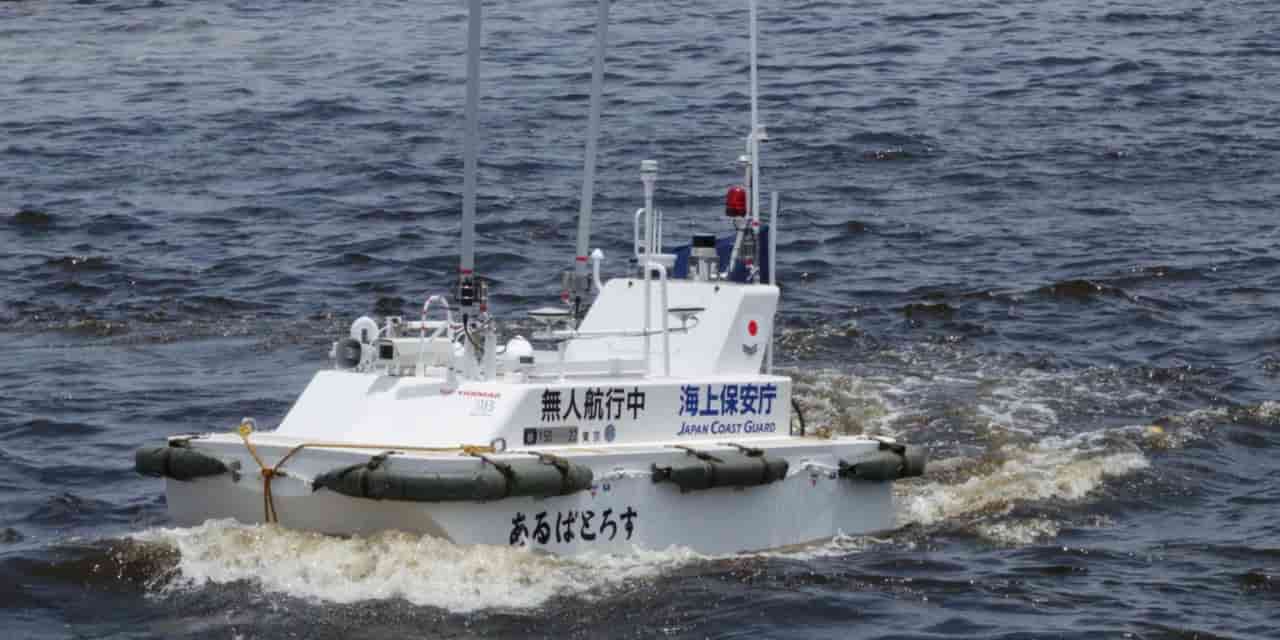
The Japan Coast Guard is testing Yanmar's uncrewed gas detection boat, "Albatross," near Yokohama. The vessel aims to enhance safety and reduce labor in detecting hazardous substances after maritime accidents.

Key Numbers

3.8 metersboat length
1.9 metersboat width
0.3 tonsboat gross tonnage
5 knotsboat speed
2GA-ASI SeaGuardian RPA systems acquired
2025SeaGuardian delivery year
24 hoursSeaGuardian flight endurance

Who's Involved

Japan Coast Guard
testing uncrewed gas detection boat and acquiring RPA systems
Yanmar Holdings
developer of the uncrewed gas detection boat
General Atomics Aeronautical Systems, Inc. (GA-ASI)
supplier of SeaGuardian Remotely Piloted Aircraft
Japan Coast Guard trials automated boat for gas leak detection

↳ Why This Matters

These advancements in autonomous maritime technology enhance the safety and efficiency of the Japan Coast Guard's operations, particularly in hazardous environments, while also expanding their surveillance and response capabilities.

Key facts

  • The Japan Coast Guard is testing Yanmar's uncrewed gas detection boat, named "Albatross."
  • The boat is designed to detect hazardous gases and dangerous substances after maritime accidents.
  • Testing will focus on rapid deployment, accuracy of the detection equipment, and remote control system capabilities.
  • The Japan Coast Guard has also contracted for two GA-ASI SeaGuardian Remotely Piloted Aircraft (RPA) systems, expected in 2025.
  • The SeaGuardian RPAs will be used for maritime surveillance, search and rescue, and disaster response.

The Japan Coast Guard is advancing its capabilities in maritime safety and surveillance through the testing of autonomous vessels and aircraft. Near Yokohama, the service is evaluating Yanmar's uncrewed gas detection boat, named "Albatross," which is designed to safely identify hazardous substances following marine accidents. This initiative aims to reduce risks for human crews and improve the efficiency of detection operations.

The "Albatross" boat measures 3.8 meters in length, 1.9 meters in width, and has a gross tonnage of 0.3 tons, capable of speeds exceeding 5 knots. Testing will encompass rapid deployment from land transport, the precision of its hazardous substance detection equipment, and the functionality of its remote control system. This development is part of a broader effort to enhance maritime safety and response capabilities.

In parallel, the Japan Coast Guard has contracted for two SeaGuardian Remotely Piloted Aircraft (RPA) systems from General Atomics Aeronautical Systems, Inc. (GA-ASI), with deliveries scheduled for 2025. These medium-altitude, long-endurance aircraft can operate for over 24 hours and are equipped with advanced surveillance technology, including maritime surface-search radars and electro-optic/infrared cameras. The SeaGuardians will support missions such as maritime surveillance, search and rescue operations, and disaster response, building on previous successful deployments, including during the Noto Peninsula earthquake and the 2023 G-7 Summit.

Frequently asked questions

The uncrewed gas detection boat is named "Albatross."

The boat is designed to detect hazardous gases and dangerous substances after maritime accidents, making the process safer and less labor-intensive for human crews.

The boat is 3.8 meters long, 1.9 meters wide, and has a gross tonnage of 0.3 tons.

The SeaGuardian Remotely Piloted Aircraft systems are used for maritime surveillance, search and rescue, and disaster response missions.

What Happens Next

01The Japan Coast Guard will conduct various verification tests for the "Albatross" boat.
02The SeaGuardian RPA systems are scheduled for delivery in 2025.

How It Developed

The Japan Coast Guard began testing Yanmar's uncrewed gas detection boat, "Albatross."
The boat is designed to detect hazardous gases after maritime accidents.
Testing includes rapid deployment, detection accuracy, and remote control system functionality.
The Japan Coast Guard also acquired two General Atomics Aeronautical Systems, Inc. (GA-ASI) SeaGuardian Remotely Piloted Aircraft (RPA) for delivery in 2025.
These RPA systems are intended for maritime surveillance, search and rescue, and disaster response missions.

Sources

T1
Japan Coast Guard trials self-piloting boat for gas leak detectionNikkei Asia
T2
Japan Maritime Defense Force Selects SeaGuardians From GA-ASIga-asi.com
T2
危険物探知用無人艇の運用に向けた検証を開始~危険・有害物質検知作業をより安全に実施するために~ | 海上保安庁kaiho.mlit.go.jp
T2
Japan acquires 2 GA-ASI SeaGuardians - Satnewssatnews.com

Related Stories

Japan to use AI to accelerate materials development tenfold
24 Aug · 3:25 PM
Japan backs fusion, recycling startups with $125m public-private funding
23 Aug · 6:06 PM
Xiaomi Unveils New Xring Chip, Taps TSMC for 3nm Production
24 Aug · 6:24 AM
Thomson Reuters builds AI model using Chinese tech to reduce reliance on Claude
24 Aug · 1:11 PM
Chinese researchers develop compact, high-speed camera for ghost imaging
24 Aug · 4:05 AM