Key facts
- A 100-million-year-old fossil of a four-winged, feathered dinosaur named Norellraptor barsboldi was found in northeastern China.
- The dinosaur measured 57cm (22 inches) long and belonged to the microraptorines, a group closely related to birds.
- The discovery suggests that dinosaur flight may have evolved in more complex ways than previously assumed.
- The fossil was excavated from the Jiufotang Formation in Liaoning Province, China, known for its exceptionally well-preserved fossils.
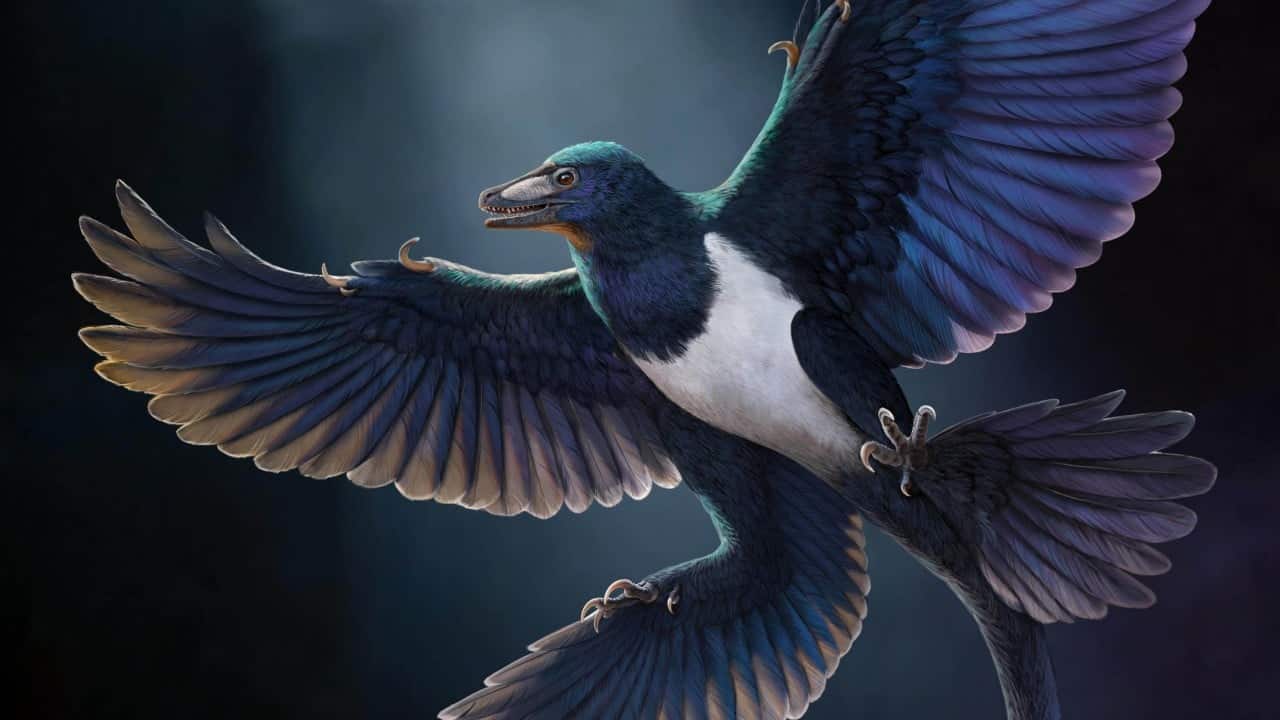
A remarkably preserved 100-million-year-old fossil of a small, feathered dinosaur, Norellraptor barsboldi, has been discovered in northeastern China, potentially challenging existing theories on the origin of dinosaur flight. This newly identified species, measuring 57cm (22 inches) long, is characterized by its four wings and belongs to the microraptorines, a group of dinosaurs closely related to birds.
The discovery, reported by a research team led by Xing Xu of the Institute of Vertebrate Paleontology and Paleoanthropology (IVPP) at the Chinese Academy of Sciences, suggests that the evolution of flight in dinosaurs was more complex than previously understood. The fossil was excavated from the Jiufotang Formation in Liaoning Province, a site renowned for its exceptional fossil preservation due to rapid burial by volcanic ash. This unique taphonomy has preserved soft tissues and delicate feather traces in high resolution, contributing to our understanding of ancient ecosystems.