Key facts
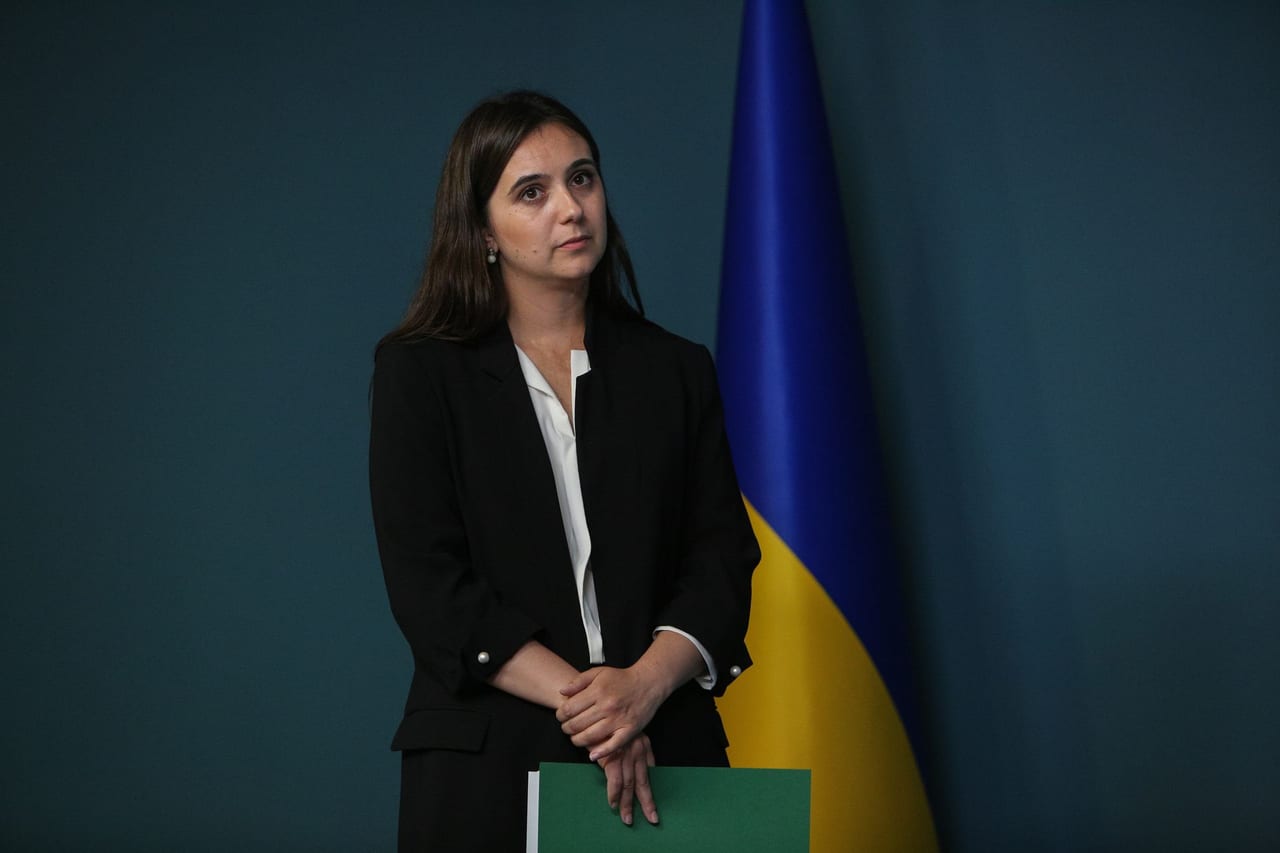
- Iuliia Mendel, former press secretary to Ukrainian President Volodymyr Zelensky, has been accused of echoing Kremlin narratives.
- Mendel was barred from speaking at the European Parliament on September 16.
- Mendel claims that the West and Zelensky himself are obstacles to peace.
- Mendel alleged that Zelensky rejected potential peace agreements during earlier talks.
- A survey indicated that only 32% of Ukrainians would agree to a peace deal requiring complete withdrawal from Donbas.
- Mendel also criticized Zelensky's domestic governance and alleged corruption scandals.
Iuliia Mendel, who previously served as press secretary to Ukrainian President Volodymyr Zelensky, has faced accusations of promoting Kremlin narratives while advocating for peace. Her recent address, delivered via video after being denied entry to the European Parliament, has been analyzed for its content regarding the war in Ukraine.
Mendel, who left her position in 2021 before the full-scale invasion, claims that the West and Zelensky himself are hindering peace efforts. She alleges that Zelensky is pursuing an "unachievable" path to victory and has rejected potential peace agreements, citing vague "agreements" from past talks. However, the analysis contrasts this with the actual progression of peace talks, noting Zelensky's past acknowledgments of potential temporary territorial concessions and Ukraine's stated precondition for a ceasefire along current front lines. Russia, meanwhile, has demanded Ukraine cede Donbas.
Mendel also suggested that various interpretations of peace terms existed that could have helped Ukraine retain control, a point the analysis notes Zelensky has publicly supported by proposing solutions for temporary Russian control of occupied territories before diplomatic reclamation. However, Mendel's own statements later in her address listed shifting Ukrainian positions on NATO accession, Crimea's return, and 1991 borders, suggesting a softening of Kyiv's stance while Russia has remained inflexible.
Furthermore, Mendel criticized Western governments for allegedly prioritizing the destruction of Russia over Ukrainian lives and refusing to engage with Russian President Vladimir Putin. The analysis counters that Ukraine's allies have made diplomatic overtures, albeit without progress due to Russia's unwillingness to compromise.
On domestic matters, Mendel criticized Zelensky's governing style and alleged corruption. While acknowledging that Zelensky and his team have faced public criticism regarding corruption scandals and communication, the analysis refutes Mendel's portrayal of Ukraine as resembling Soviet-era repressions. It highlights that calling for peace is not illegal and that public criticism of Zelensky is active and has led to tangible results, such as the President's Office backing down from attempts to undermine anti-corruption agencies and the firing of Commander-in-Chief Oleksandr Syrskyi following protests.
Mendel's stated motivation for her address was to "speak for the Ukrainian people." She cited a Gallup poll indicating a majority of Ukrainians desire a negotiated end to the war. However, a survey by the Kyiv International Institute of Sociology (KIIS) in August revealed that only 32% of Ukrainians would accept a peace deal requiring complete withdrawal from Donbas, even with Western security guarantees, while 59% of respondents did not specify conditions.