
Key facts
- Human exoskeletons are powered assistive devices designed to increase lower-body strength and endurance.
- Companies like IKEA, Ford, Boeing, and Mazda Toyota use exoskeletons for industrial tasks.
- Exoskeletons have been tested for military use, with Ukrainian soldiers reporting reduced fatigue and increased combat effectiveness.
- The exoskeleton sector is valued at around $500 million and is predicted to double or triple by the mid-2030s.
- Advancements in robotic motors, sensors, and control systems have driven exoskeleton development.
- Early concepts date back to the late 19th century, with powered devices emerging in the early 20th century.
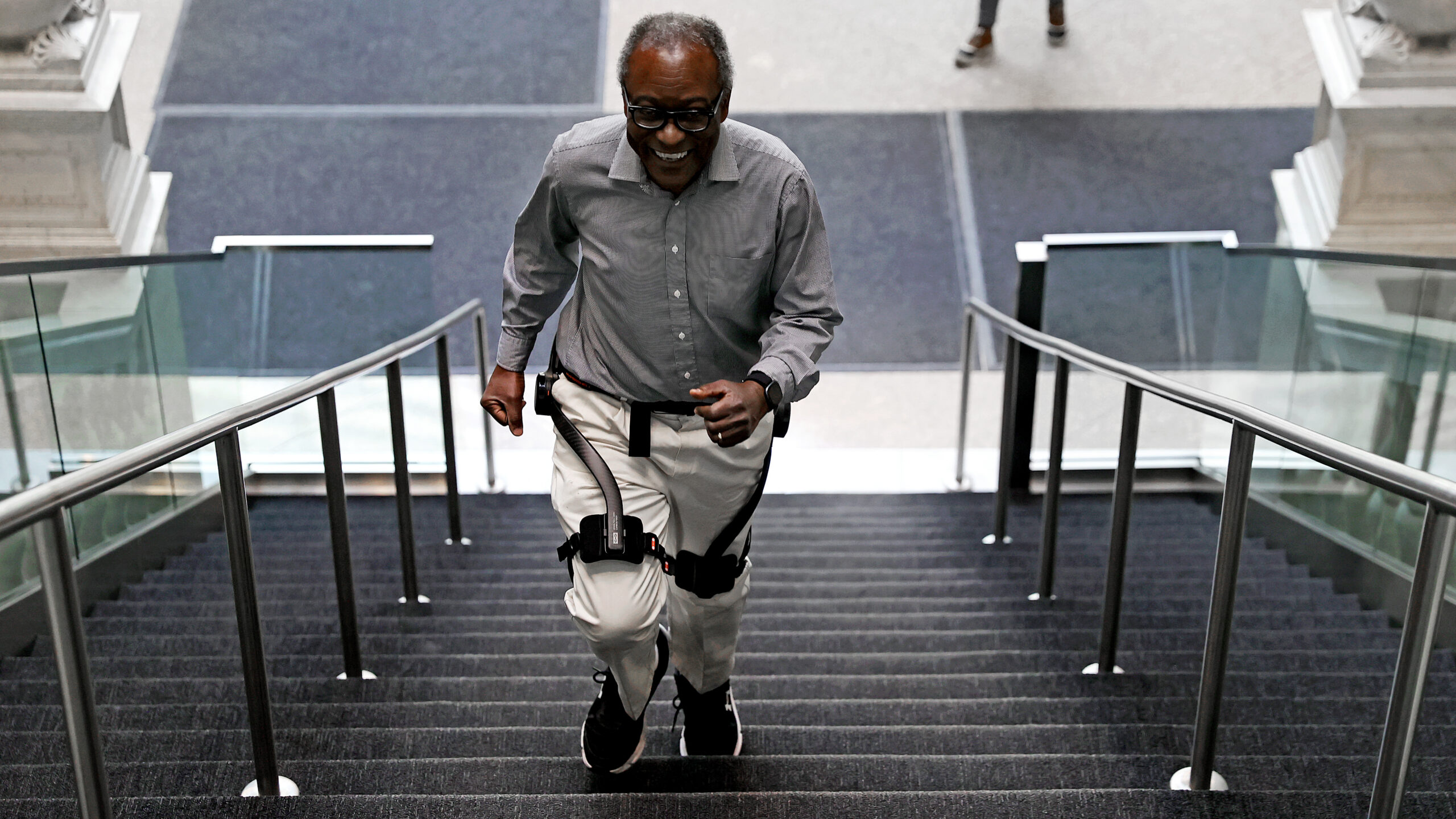
Human exoskeletons, devices that enhance physical capabilities through external mechanical structures, are increasingly being adopted across various sectors. Members of Seattle Mountain Rescue are testing these powered assistive devices to improve strength and endurance during search operations in the US Pacific Northwest. These devices attach to the body, typically the hips and legs, to augment lower-body strength for tasks like climbing or carrying heavy loads.
In industrial settings, companies such as IKEA, Ford, Boeing, and Mazda Toyota have integrated exoskeletons into their operations. IKEA uses SuitX exoskeletons to assist warehouse workers with heavy materials, while the automotive manufacturers employ them on assembly lines. A project in Finland, ExoPELA, assessed the benefits of exoskeletons for rescue and firefighting work, finding noticeable improvements for users.
Military applications are also emerging, with the Ukrainian military revealing in early 2026 that soldiers had used Hypershell exoskeletons on the front lines. According to Colonel Vitalii Serdiuk, soldiers using these devices experienced less fatigue, worked faster, and maintained combat effectiveness for longer periods. The Hypershell device attaches to the user's waist and thighs to assist with hip movement and strengthen the lower body.
Beyond these demanding fields, consumer and clinical exoskeletons for everyday assistance, rehabilitation, and exercise are becoming available. The overall sector is currently valued at approximately $500 million and is projected to double or triple in size by the mid-2030s, driven by more affordable and accessible robotic motors, sensors, and control systems.
The concept of exoskeleton-like devices dates back to the late 19th century, with Nicholas Yagn patenting a wearable exercise apparatus in 1890. Leslie C. Kelley patented a steam-powered walking support device in 1919. By the late 1960s, actuated robotic exoskeletons with electronic controls were being developed, paving the way for today's advanced devices.
Modern active robotic exoskeletons typically feature a lightweight frame with ergonomic attachments. Actuators convert battery power into mechanical movement, guided by control units that adapt to the user's tasks and fatigue levels. Some systems offer power augmentation, while others provide 'assist-as-needed' support for rehabilitation or full robotic control for individuals with lost motor functions.