Key facts
- The Chicxulub asteroid impact created a hydrothermal system that may have lasted 8 million years.
- Researchers analyzed rock samples from the impact zone to determine the system's longevity.
- The hydrothermal system's duration was previously estimated at 2 million years.
- Hot water gushing into the porous, impact-deformed rock could have attracted microorganisms.
- Potassium-argon dating of feldspar samples indicated the system remained heated from 66 million to 58 million years ago.
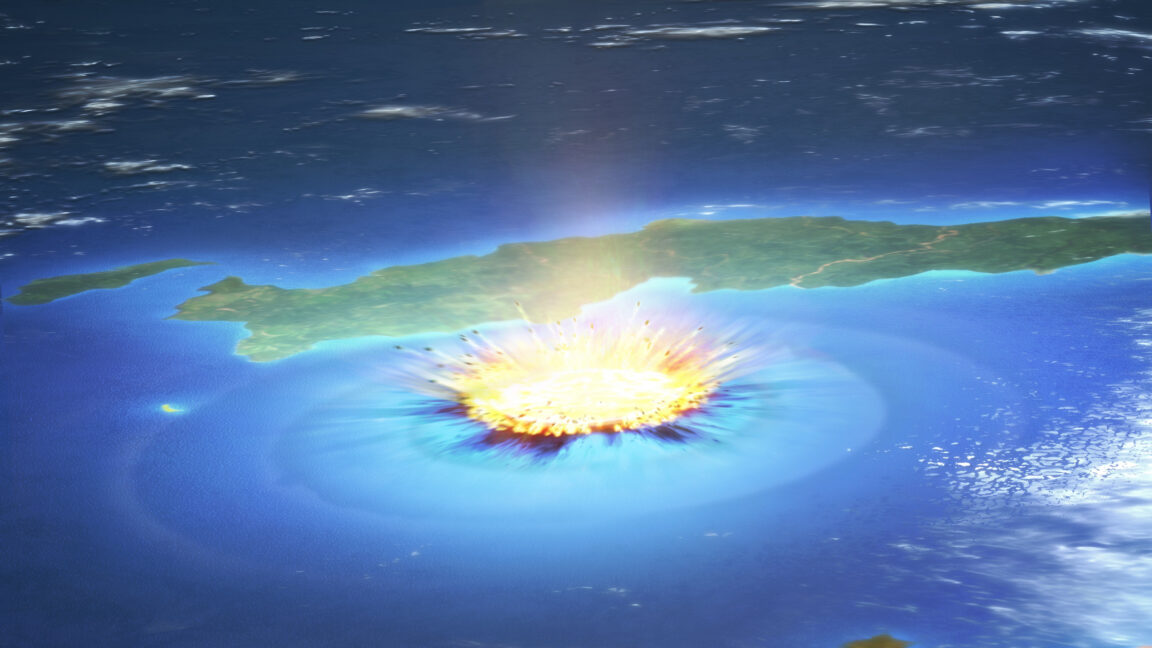
Approximately 66 million years ago, the Chicxulub asteroid struck Earth, creating a massive impact crater and triggering a hydrothermal system that may have persisted for 8 million years, potentially fostering life. Researchers, led by geologist Annemarie Pickersgill of the University of Glasgow, analyzed rock samples from the impact zone to understand the system's duration and habitability.
The collision caused intense subterranean deformation, melting rock and making it porous. Seawater seeping into these pores formed a hydrothermal system. This hot water, gushing into the cold ocean depths, could have provided a habitable environment for microorganisms.
Previous estimates suggested the hydrothermal system lasted about 2 million years. However, the new analysis, using potassium-argon dating of feldspar samples, indicates the system remained active for at least four times longer, from 66 million years ago until 58 million years ago. This extended period of heat and nutrients could have offered ample opportunity for prebiotic chemical reactions and the development and propagation of microbial life.
Computer simulations also supported these findings, suggesting that temperatures would have remained high enough for microbial colonies to thrive for millions of years. The study of Chicxulub's hydrothermal system can offer insights into potentially habitable environments created by large impacts on other planetary bodies.