Key facts
- Canada is developing its own sovereign space launch capability due to strained US relations.
- The Canada Rocket Company is developing the R-2 rocket, a medium-lift vehicle.
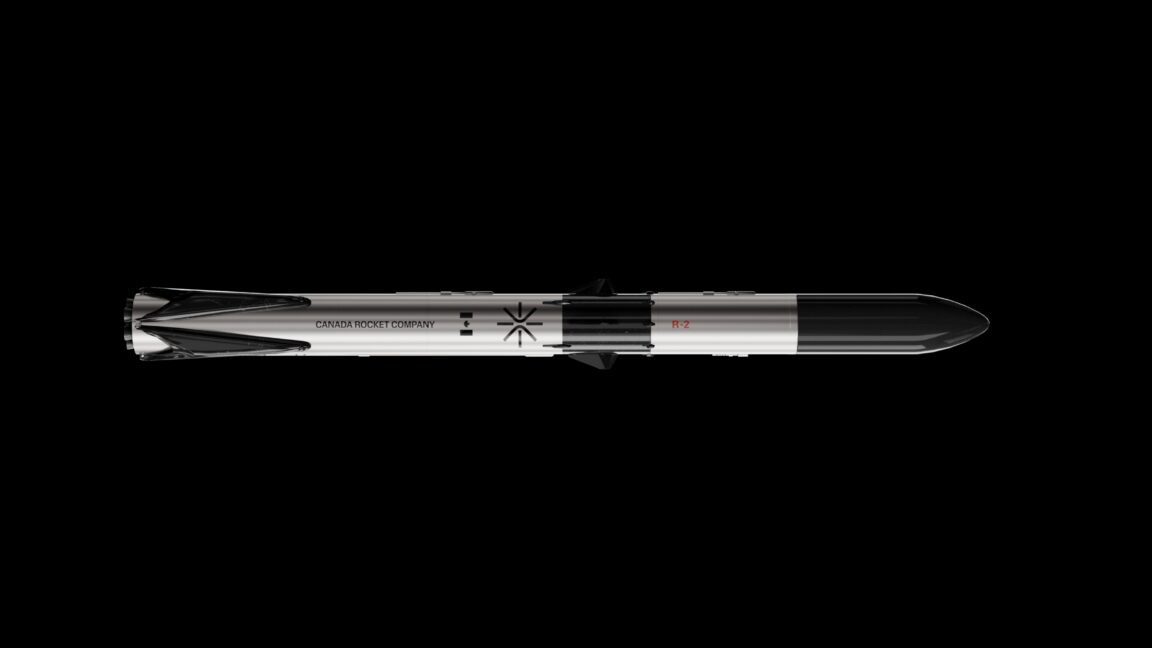
- The R-2 rocket is designed with nine methane-fueled engines and landing legs for potential first-stage reuse.
- The R-2 rocket could carry up to 12.5 metric tons to low-Earth orbit.
- Canada Rocket Company aims for a potential launch by 2032.
- The company has raised $22.5 million to date and is seeking Series A funding.
Amidst fraying relations with the United States, Canada is intensifying efforts to establish its own domestic rocket launch industry, driven by a desire for greater sovereignty and self-reliance. The Canadian government has begun awarding funds to companies aiming to develop launch capabilities, signaling a strategic shift away from over-reliance on American services.
One of the recipients, the Toronto-based Canada Rocket Company, has decided to bypass the development of small rockets and focus directly on a medium-lift vehicle, the R-2 rocket. According to CEO Hugh Kolias, this approach is more technically and infrastructurally sound for de-risking a rocket development program. The R-2 rocket, which bears some resemblance to SpaceX's Falcon 9, is designed with nine methane-fueled engines and features landing legs, indicating a future path toward reusability of its first stage. It is projected to carry up to 12.5 metric tons to low-Earth orbit, with a potential launch target of 2032.
This push for sovereign launch capability aligns with Canada's broader Defense Industrial Strategy, which prioritizes space launch as a key defense and industrial capability. Kolias noted that geopolitical shifts are creating opportunities for Canadian industries to build ambitious enterprises, emphasizing the importance of owning one's destiny in critical economic and defense sectors. The Canadian government may eventually invest up to half a billion dollars in sovereign launch capability, potentially coupled with guaranteed launch contracts.
Canada Rocket Company, currently a small team of about 30, including Canadian rocket scientists who have returned from working at major US space firms, has raised $22.5 million to date and is seeking further funding through a Series A round. The company is also investing in infrastructure, with a $30 million Jeremy Hansen Test Facility planned near London, Ontario, named after Canadian astronaut Jeremy Hansen. This facility is slated to begin engine testing in approximately two years.