Key facts
- The two leaders agreed to open two new crossings, taking the number open on the island to 11, according to media in Cyprus.
- The UN called the November 9 meeting positive and said the leaders would meet again in coming weeks with Guterres present.
- Christodoulides said the goal is resuming talks before the end of the Secretary-General's term at the end of the year.
- The leaders also discussed the potential opening of other crossing points, the UN statement said.
- Past talks collapsed over disagreement on the role Turkey would play in a future settlement.
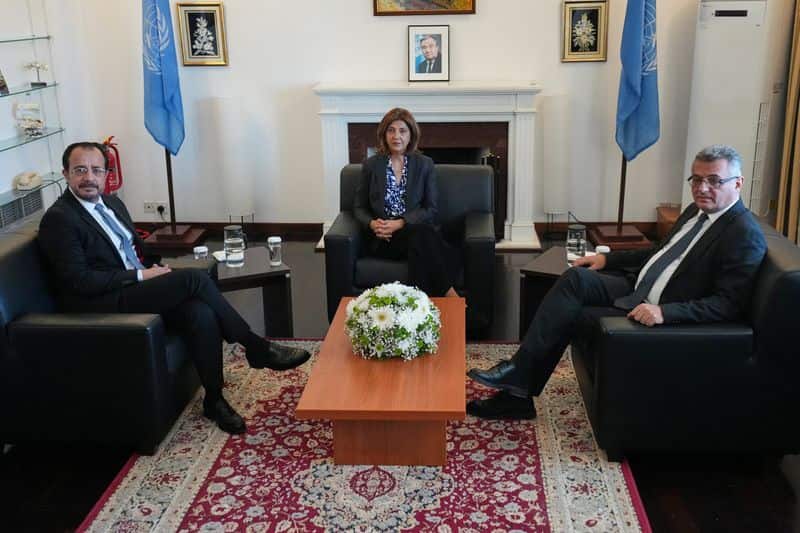
Greek Cypriot leader Nikos Christodoulides and Turkish Cypriot leader Tufan Erhurman agreed on November 9 to open two new border crossings, coordinate on emergency responses and share archival materials, part of a UN-backed effort to resume peace talks after nearly a decade of deadlock. The agreement brought the number of open crossings on the divided Mediterranean island to 11, according to media in Cyprus.
The two leaders met UN special envoy Maria Angela Holguin for about four hours in a UN-controlled buffer zone. The UN said in a statement that the meeting was "positive" and that the two leaders would talk again in coming weeks in the presence of UN Secretary-General Antonio Guterres. The two leaders also discussed the potential opening of other crossing points, the UN statement said.
The sides have disagreed over ground rules for talks since they met Guterres on the island in the summer. Christodoulides told reporters after the meeting: "We are continuing this effort with absolute seriousness and one single goal: resuming the talks before the end of the Secretary-General's term," which ends at the end of the year.
Cyprus was split after a Turkish invasion in 1974 in response to a brief coup engineered by Greece's then military rulers. A power-sharing administration of Greek and Turkish Cypriots crumbled in 1963, and a UN force, now one of the oldest peacekeeping operations in the world, monitors a 180-km (112-mile) ceasefire line splitting the two sides. One of the reasons past talks collapsed is disagreement on the role Turkey would play in the future; Greek Cypriots are against Ankara having any hands-on involvement, while Turkish Cypriots say it is essential.