Key facts
- Syria and Jordan signed 11 cooperation documents covering investment, civil aviation, food security, cloud seeding and a proposed railway, Shibani said.
- A joint security and technical committee will investigate the circumstances of the October 26 airstrikes, Shibani said.
- Jordan said its October 26 strikes targeted Islamic State militants linked to a deadly church attack in Karak province.
- Syrian authorities said the strikes killed seven civilians, including three children.
- Shibani said trade between the two countries nearly tripled in the past year to $330 million.
- Safadi reaffirmed Jordan's support for Syria against Israeli attacks and urged international intervention to halt them.
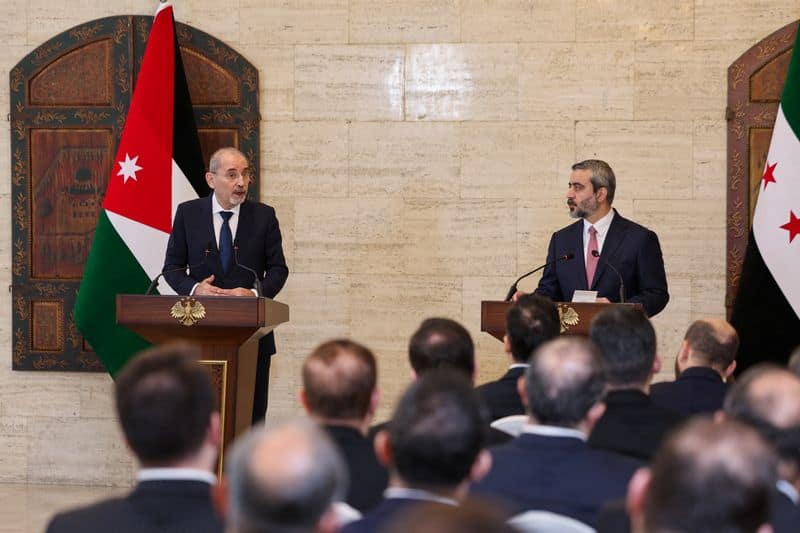
Syria's and Jordan's foreign ministers met in Damascus on November 9 for the first time since Jordanian airstrikes killed civilians in southern Syria, announcing a joint investigation into the incident and signing 11 new cooperation agreements.
Syrian Foreign Minister Asaad al-Shibani said Jordan had shown understanding and openness toward resolving the incident in Deraa province. He said the two countries had set up a joint security and technical committee to investigate the circumstances of the airstrikes.
Jordan said its strikes on October 26 targeted Islamic State militants linked to a deadly attack on a church in Jordan's Karak province. Syrian authorities said the strikes killed seven civilians, including three children.
"Work is underway to redress the harm and compensate the innocent victims," Shibani told a joint press conference with his counterpart Ayman Safadi, following the third session of the Syria-Jordan Higher Coordination Council, attended by high-level ministerial and technical delegations from both countries.
"Syrian blood is as precious to us as Jordanian blood," Safadi said, renewing his condolences to Shibani and the families of the victims. He said the ties between the two countries were strong.
The meeting marked an effort to move past a rare diplomatic test for Damascus and Amman, which have expanded political, economic and security cooperation since the overthrow of former Syrian President Bashar al-Assad in December 2024.